

A Trial by Fire
The forging of a new Ukrainian civic identity amidst the crucible of war

In his work Imagined Communities, political scientist Benedict Anderson attributes the much of the modern conception of a “national identity” not only to linguistic, religious, or ethnic distinctions, but also to the profound effects which collective experiences can have upon a society.
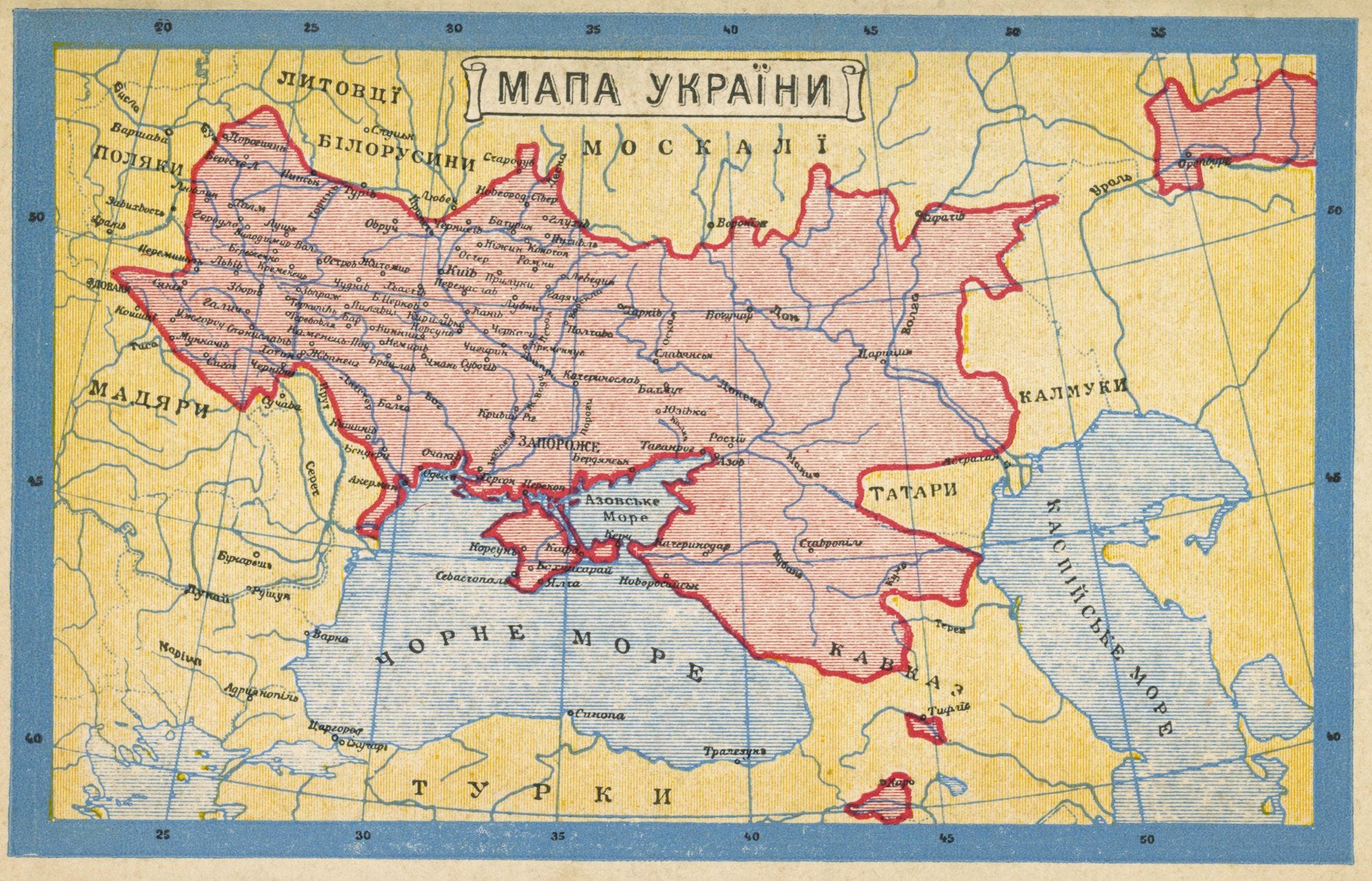
And in fact, whether it be through armed conflict, the integrating effects of a free-market economy, or the rise of mass media, history does show that these unifying catalysts often prove powerful enough to turn vague abstractions surrounding “identity” into what to this day remains one of the most important ideals ever conceived in human history: nationalism.
Take, for instance, France—arguably the first place where such a train of thought was adopted en masse. In 1800, only about 10% of France’s population spoke “French.” After decades of conflict during the French Revolution and the Napoleonic Wars, however, the nation was among Europe’s most internally cohesive. What had once been a country where national unity extended hardly beyond the hinterlands of Paris was reconstructed into a true nation state not out of pure volition, but rather because decades of armed conflict with virtually the entire European continent had conditioned the nation into a unified “whole” through the indiscriminately collective experience which was a prolonged period of widespread conflict. The same pattern would occur in Italy, German, Poland, China, and almost everywhere else in the world throughout the next century.
The Case for Ukraine:
While the distinction between Ukrainians and their Polish and Russian neighbors had always been discernible, the modern conception of a Ukrainian national identity truly emerged as a tangible doctrine in the mid 19th century— a time where the same was happening all across Europe as well.
Of course, Ukraine at that point had hardly ever been a self-governing political entity. Its western and central regions had long been under the control of Poland, while much those lands which lay in the east and along the Black Sea had been heavily integrated within Russian society. These long-past territorial realities still leave a mark on a modern Ukrainian state whose east has long been predominantly Russian-speaking and whose center and west overwhelmingly speak Ukrainian—a language heavily influenced by those dialects once predominantly spoken in Polish-dominated Western Ukraine.
As distinctive as Ukraine’s identity might be, its close cultural, religious, and historical ties with the Russian state are undeniable. Centuries of harsh Russification policies, near-perpetual incorporation within every Russian state in modern history, and sheer proximity have only exacerbated this, especially in those parts of Ukraine like the Donbas and Odessa that lie close to Russia. While Putin’s claims of Russia and Ukraine’s “historical unity” are most certainly exaggerated, it is for these reasons that before 2014, Ukraine was so integrated with Russia that its national identity often overlapped with the Russian one in a myriad of ways.
War and Identity:
Before the Maidan Revolution of 2014, half of Ukrainians (again, mostly in the east) frequently aligned with blatantly pro-Russian parties. And, while the Kremlin most definitely had a hand in them, numerous Russian-speaking Ukrainians did launch uprisings and protests of their own in the east and south throughout 2014 in response to what they saw as a “pro-Western coup” that would give the fervently anti-Russian and pro-nationalist Western Ukrainians dominance over the nation.
Ukraine truly was a nation of two halves, both of which was strikingly defined by the region’s tumultuous history. It’s no wonder that Western Ukrainians, far-detached from all things Russian and more culturally resonant with their former Polish occupiers would have sought E.U. integration in the early 2010s. The Eastern Ukrainians, on the other hand, were much more content with the status quo of alignment with the Russian neighbor who had always been their senior partner.
In a memo that American statesmen would unfortunately fail to grasp in the coming decade, then-US ambassador to Russia William J. Burns would express concern not only over NATO’s relationship with Russia, but about the potentially destabilizing effects over these same interstate cultural distinctions within Ukraine:
Experts tell us that Russia is particularly worried that the strong divisions in Ukraine over NATO membership, with much of the ethnic-Russian community against membership, could lead to a major split, involving violence or at worst, civil war.
In retrospect, Burns accurately reflects upon the perceived fragility of Ukraine’s very statehood at that time. It’s thus not surprising that Putin would have acted with such resolve against Ukraine both in 2014 and again in 2022. In his eyes, the mass anti-EU protests in Ukraine’s east signified a serious popular desire within Ukraine for Russian alignment, while the near-seamless conquest of Crimea and the relative success of pro-Russian revolts in Donetsk and Luhansk in that same year only strengthened this belief. And not to mention, Ukraine was almost twice as rich before cutting ties with Russia in 2014 than it was after.
When Russia decided to unilaterally invade Ukraine again in 2022, it most definitely counted upon what it thought was a great deal of “popular support” within the nation to legitimize its assault on Kyiv. However, when it was these very “supporters” of Russia in Ukraine’s east and south who experienced firsthand the Russian ground assaults, artillery shelling, strikes on critical infrastructure, drone and missile attacks on civilian targets, and a number of documented war crimes, it’s not hard to see how most Ukrainians sidelined their former domestic political beliefs as their very livelihoods came under relentless attack.
It was perhaps this critical miscalculation of Russia’s part that cost it not only its current war, but its narrative of Ukrainian statehood. Those who once saw Russia as a brotherly nation have watched as their cities, families, and civic institutions have been torn apart. Even among those Ukrainians who once aligned with Russia, they did so under the presupposition that Ukraine would always be an independent nation—not part of Russia, but rather in a harmonious state of co-existence with it. With Moscow now outright asserting its intentions to annex a fifth of Ukraine, the Russians are self-contradicting their false claims that they too intended to respect Ukraine and its people by “liberating” them from a Western proxy regime.
If that’s what Putin intended to do, it doesn’t really make sense why he started bombarding the very people he was claiming to protect…
Parting Ways:
Since 2014 and more especially since 2022, Ukraine has been embroiled in an unimaginable crucible of armed conflict. While the Russo-Ukrainian War has yielded far more tragedies than triumphs, it has at the very least allowed for Ukraine to not only militarily assert its independence from Moscow by halting its advance on Kyiv in the winter of 2022, but also by truly rallying the entirety of the Ukrainian population behind a unified cause in a way unprecedented in the 21st century. Like 9/11 in the United States or China’s “War of Resistance” against Imperial Japan, collective tragedies are the most potent unifiers for what may otherwise be diverse national groups.
In Ukraine’s case, this forging of a far-stronger national identity is not temporary. Years of war will live on through geopolitical pressures and collective memory, and while the political and military fight for Ukraine’s survival will need to play its course over the next several decades, the national one has already and unequivocally been won.
The argument that Ukraine is in any way not an independent nation state has not only been dispelled of by the evaporation of sectarian distinctions within Ukraine itself, but also throughout all of Central and Eastern Europe— a region whose vested interests now lie deeply intertwined with those of the Ukrainians.
Ultimately, if history shows us anything, it is that ideas—like those being forged in Ukraine today— tend to be far stronger than material instruments of power projection.