

A Two-way Street
After months of derision on the global stage, Ukraine now stands as perhaps the only nation with the military capacity to help Washington weather Iran's mounting drone offensives

Under the Trump administration, Washington’s foreign policy has not only adopted a more regionalist and self-assertive undertone, but also precipitated a drastic shift in where the bulk of America’s diplomatic and military resources are being directed. Over the past year alone, this has largely involved a pivot away from Europe and towards areas like Latin America and the Middle East, where Washington has waged two armed interventions in the past three months alone.
This strategic outlook deeply contrasts with the Europe-centric platform which has defined American foreign policy for the past century, and it is largely this discrepancy and the underlying causes for such a pivot that have put the Transatlantic alliance in such a fragile position as of late. In the United States, arguments abound that NATO has become vestigial to American strategic interests in a world where the Soviet Empire is no more and China is rather the principle threat, a sentiment only worsened by an ongoing war in Ukraine which has further entrenched the risks of greater Sino-Russian alignment and American overextension overseas.
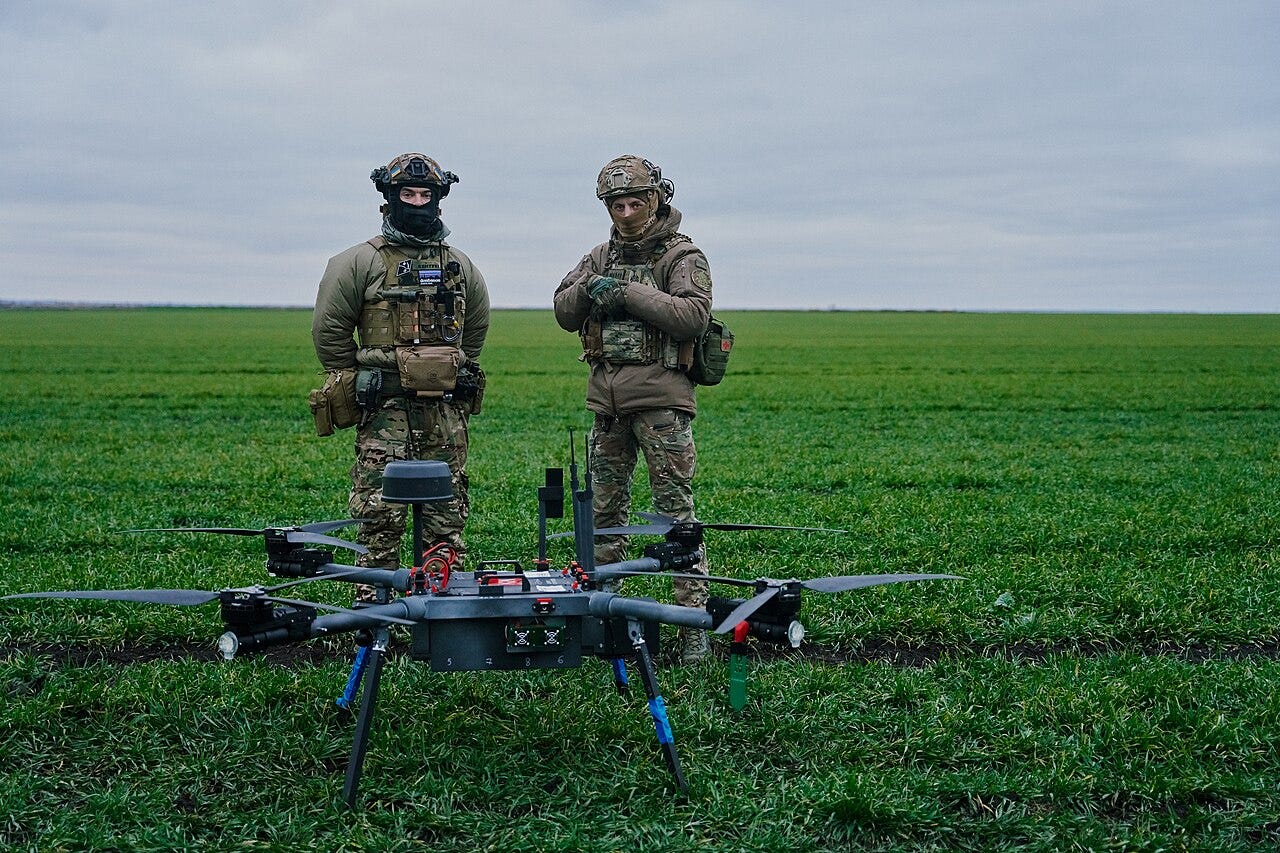
While rather self-explanatory, no nation sits more front-and-center in this growing struggle between a Russian, Chinese, and broader “revisionist” movement against American dominance in Eurasia than does Ukraine. Over twelve years of war with Russia have accustomed Kyiv to the unwavering belief that collective security with foreign patrons will be the only possible salvation from its current plight. And yet, in a world where the prevailing norms of collective security and global governance that have defined history since the Second World War are rapidly and irreversibly breaking down, the practicality of this outlook has become deeply compromised.
In substantive terms, these dynamics have resulted in the suspension of virtually all direct American military assistance to Ukraine, which is now receiving the bulk of its material support from European nations like Germany, France, Poland, and the United Kingdom. Of course, this is all complemented by the increased pressure of countries like Russia and the United States for Ukraine to sign a peace deal that it perceives as fundamentally unacceptable.
These factors make Ukraine’s day-to-day war outlook far more strenuous, but they have inadvertently cultivated a sense of self-sufficiency within a nation that once lacked the resources necessary to repel the world’s second-largest military. With the help of Polish and German defense initiatives, Ukraine’s military and economic partnerships have become far more localized to Central and Eastern Europe. And within Ukraine itself, what is arguably the largest and most extensive military industrial complex (other than Russia’s) has been constructed to make up for lost foreign assistance. It’s probably also the most effective complex of its kind, since Ukraine has had the ability to test and refine its warfighting capabilities in real time. The benefits of this have included the creation of one of the world’s most impressive drone manufacturing industries, among other things.
Why the Middle East Needs Ukraine:
Ukraine’s need to counter rampant Russian drone and missile attacks on its cities and military installations over the past four years has resulted in the creation of streamlined drone interceptors at scale and at very low costs. In a rather ironic turn of events, these more-practical than “luxury” technologies have caught the attention of some of the least practical and most affluent nations in the world: The Gulf States of the Middle East, all of whom are now engaged in an existential defense against their Iranian neighbors on the other side of the Persian Gulf.
Building supertall skyscrapers in the middle of a desert is certainly easy when nobody is trying to destroy them and the oil is flowing without the risk of state-sponsored piracy, but when neither of these conditions are met, Ukraine might just have a lesson or two to give on what unmitigated warfare looks like to those unfamiliar with it…
The ongoing conflict in the Middle East has largely been defined by Iranian drone and missile strikes anywhere and everywhere that will cause the most disruption to regional stability, a policy which has put the Gulf States of Qatar, Kuwait, Oman, Saudi Arabia, Bahrain, and the United Arab Emirates in particular trouble. The deeply sophisticated surface-to-air defense systems these victims possess on account of American sponsorship can certainly stave off Iran’s air attacks for some time, but as Iran’s bottomless supply of armed drones continues to be deployed, the multi-million dollar cost of individual interceptor missiles used by the United States and its allies becomes both impractical and unsustainable in the long run.
It is in this logistical and financial shortcoming that Ukraine provides a compelling solution. Since war broke out in the Middle East two weeks ago, Kyiv has reportedly received well over a dozen direct requests from Gulf nations (and even the United States) requesting access to Ukraine’s drone interceptor stockpiles or, at the very least, technical expertise from the battle-tested nation. If the Gulf States possessed these devices, defending the skies above Dubai and Riyadh would become far more economical than it already is. And if you think cost isn’t an inhibitor for these otherwise wealthy nations, consider that their oil revenues aren’t getting through the Strait of Hormuz anytime soon…
The Long-term Implications and Observations:
Whether Ukraine decides to follow through on such requests is yet to be seen, but there is no doubt that Zelensky would leverage any such assistance to foreign parties to put his own country’s outlook on a more level footing with countries like the United States, especially when it comes to the ongoing peace negotiations between Kyiv, Washington, and Moscow. Yet, beyond this rather obvious arrangement associated with all transnational military cooperation, Ukraine's newfound advantage in a skillset nobody else possesses can lead us to some deeply fascinating conclusions about the country’s relationship with a world descending into complete and utter disarray.
First of all, Ukraine’s tangible advantage in the field of drone warfare positions it to be more than just a proxy of foreign parties in the future; rather, it is now acting independently of Washington and utilizing its own inherent strengths to advance its position on the global stage. Four years of Russian gridlock in the Donbas and the complete mobilization of the Ukrainian economy further suggest that Ukraine is graduating to the status of a far more self-sustaining and politically assertive nation in regional politics. This is Russia’s worst fear manifested at the worst possible time.
The potential cultivation of defense partnerships between Ukraine and the Gulf States also reveals to us how mutual security structures might look in an increasingly depolarized world, free the of Great Power monopolies on assistance that Washington and Moscow once dominated. In such scenarios, military assistance becomes more regionalized, more conditional, and more mutually beneficial. This is how global politics were conducted for thousands of years before global powers like the United States, the Soviet Union, and the European colonial empires introduced a “patronage” system that doesn’t hold up when you can’t even navigate a cargo tanker out of your own ports safely.
The ongoing chaos in the Middle East is a symptom of global depolarization and the breakdown of international structures of economic and political organization. In its place, global and regional powers are acting in far more unilateral and self-serving ways, the United States among them. This naturally forces countries caught in the crossfire to seek regionally cohesive solutions to their existential concerns. The same outlook was embraced by Russia when it was practically expelled from the “international system” following its invasion of Ukraine in 2022. Moscow looked to Iran, North Korea, and other close neighbors to fill its needs for drones, manpower, and conventional ordinance. In the present day, the nations of the Middle East which rely upon global maritime governance to make the export of their lucrative hydrocarbons possible are now facing the same realities inherent to a lawless and ungoverned world.
Ukraine has long been categorized as a state which could only exist in a world where Great Powers agreed to respect international borders. The breakdown of this very system has certainly cost Ukraine a great deal of manpower and a fifth of its territory over the past several years, but it has inadvertently given Ukraine a vital head start over many of its other neighbors who have thus far been shielded from the coming storm of global decentralization.
Ukraine has already built the regionalized partnerships and internal infrastructure it needs to weather this storm, or at least try to. It holds strong ties with the emerging regional power which is Poland, whose broad chain of alliances in post-Soviet Central and Eastern Europe are redefining a once Russian-dominated landscape. And, its very own material strengths cultivated after years of war are giving it leverage to strike favorable deals with countries lacking its strengths. The Gulf States might be the first to call on such support, but they likely won’t be the last.
This by no means casts Ukraine’s future in a category of one-sided prosperity. The nation’s very sovereignty is still very much in question, but Kyiv has most certainly demonstrated that it is taking meaningful steps to confront the unpredictability, violence, and volatility which have defined its recent experience. If many of the world’s nations can follow suit before they get caught off guard in the same manner as have the Gulf States, perhaps the next few decades will be more palatable than they otherwise would be.
Certainly worth a second read!