

Boots on the Ground?
Washington has alluded to a possible ground assault on the Iranian island of Kharg in the Persian Gulf, the maritime hub from which almost 90% of Iran’s oil is exported

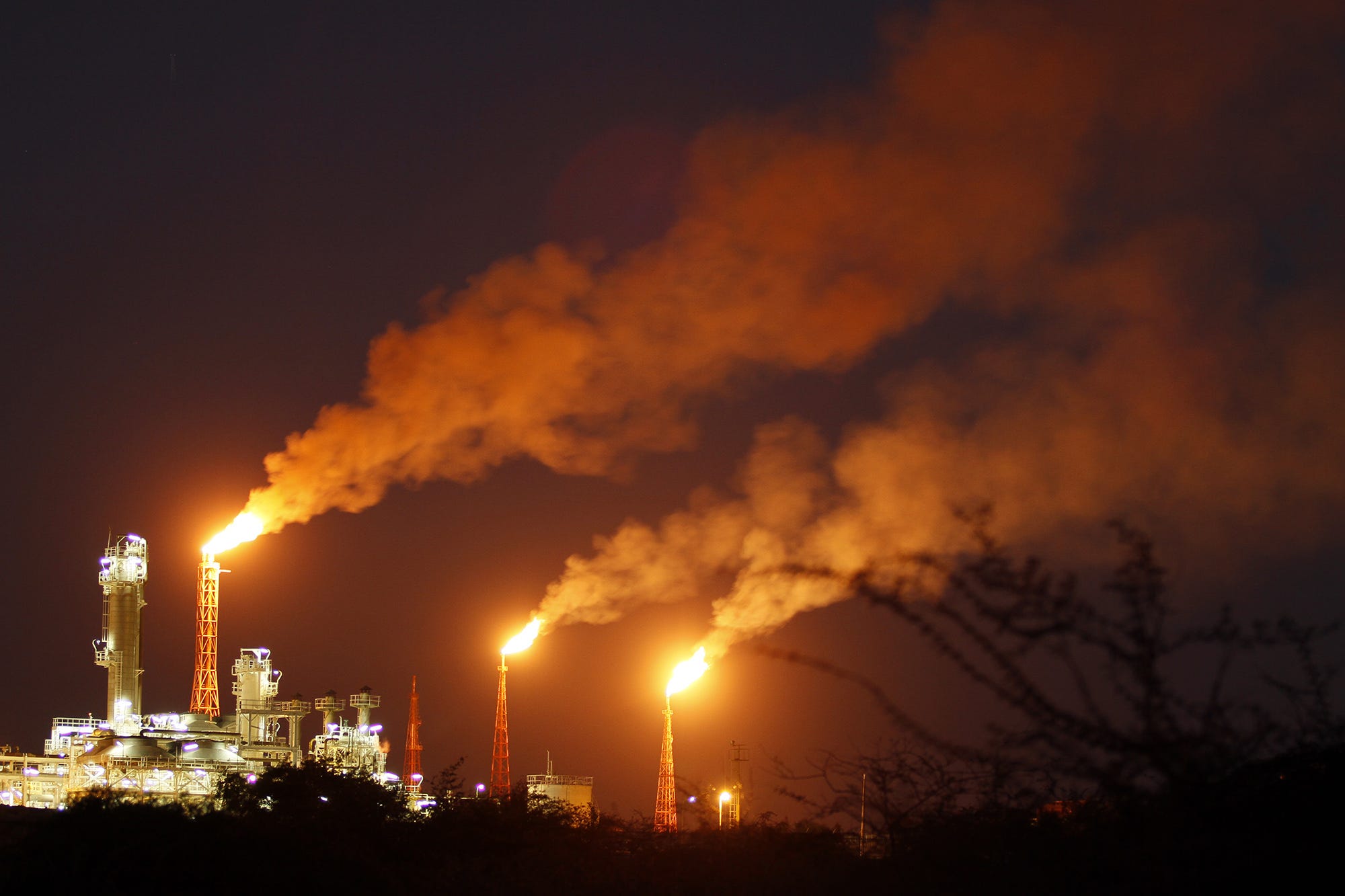
Deep within the Persian Gulf, the geographically insignificant yet economically vital “Kharg Island” has long stood as the cornerstone of Iran’s ever-important oil industry. In fact, the island lays host to about 90% of Iran’s oil exporting business. While it might seem odd to concentrate virtually every oil supertanker bound for China or elsewhere on one small island, the choice lies in the fact that the particular island is the only place whose surrounding shores are deep enough to position massive tanker ships immediately offshore in the first place. While spreading your strategic infrastructure across the broadest array of locations as possible is typically a smart line of reasoning, Iran’s vast southern coast is simply too shallow to lay host to the massive ships which account for well over half of the Islamic Republic’s budget revenues.
Kharg Island is thus both an Achilles heel and a resounding point of strength for Iran: on one hand, its priceless oil-exporting infrastructure is concentrated right in the middle of the flashpoint which is the Persian Gulf, while on the other hand it is nothing short of a cash cow for Tehran.
It would come with no surprise that, both in the past and present, the island has come to be of great interest to Iran’s adversaries during times of war. When Saddam Hussein launched his not-so-successful invasion of western Iran in 1980, he was sure to also bombard Kharg Island until there was nothing left. And while the island’s infrastructure has obviously been rebuilt since then, recent escalations in the Middle East have brought once more into the open the prospects of this long-coveted target from being leveled. In such an event, Iran as a semi-functional state (if even) would be no more. The oil would stop flowing, and so too would the money.
Will Washington Be Next?
Amidst the unprecedented wave of American and Israeli attacks against Iran in the past week, President Trump and the Department of War have been quick to pick up on the economic vulnerabilities which an attack or takeover of Kharg would precipitate. It certainly seems like a good way to make Iran’s day worse than it already is, but as with many things surrounding war, it’s nowhere near as linear and simple as it might sound…
First of all, it’s important to note that directly striking oil facilities is not exactly a preferential tactic by Washington, or anyone for that matter. When the Israelis led an effort to strike many Iranian oil facilities in the country’s interior earlier this week, they yielded near-apocalyptic scenes throughout Iran’s major cities. Of course, bombing a facility that in turn creates a Chernobyl style “cloud of doom” that made oil rain from the sky over Tehran garnered perhaps more attention abroad for its environmental implications, the White House seems skeptical about them simply because their self-evident consequences are not inherently offset by strategic benefits—oil exports are certainly of importance to Iran, but how do they plan to safely ship it abroad with their entire navy at the bottom of the ocean?
In theory, the same applies to the even more critical Kharg Island. An American aerial strike on the facilities there would be simple and likely casualty-free, but they’d also hold little benefit to America’s war aims. Destroying Iran’s oil lifeline to the world might weaken the regime in the short term (not that it isn’t already weak), but it would more consequentially doom any future Iranian state after this war to be economically run-dry, poor, stagnant, and subject to the same political volatility inherent to other nations like Syria and Iraq in years past when their oil exports have been cut off. In the end, Iran would probably turn into something bigger, more fragmented, and more chaotic than what was even seen in Iraq and Syria. That isn’t a fun thought to entertain.
The Alternative…
If the only other option would be to seize the island by force so as to leave its infrastructure intact, this would give Washington the leverage to both destabilize the current regime and and to potentially hand it back over to a more appealing Iranian government in the future. But with the Iranian Regime seemingly doubling down on its intentions to fight Washington until the end, this alternative might be no better.
Taking Kharg by force would require the direct “boots on the ground” military operation that has thus far been avoided by the United States, and it would undoubtedly lead to more American casualties than we’ve already seen. We must also consider that if American forces were to occupy an island in the middle of the Persian Gulf still in close range of Iranian drones, the question of a sustainable occupation would arise. If no off-ramp for de-escalation or a smooth transition to a friendlier regime is possible in Iran anytime soon (which seems to be the case), American forces could very likely end up occupying the island under constant drone and missile fire in perpetuity with vague end goals.
The Iranians could also destroy the island’s facilities themselves if they thought an American landing were imminent. For a regime in Tehran whose focus has shifted from long-term economic cohesion to a last-stand and “total war” approach with its perceived aggressors, the island might just make for the ideal trap to drain American resources with absolutely no strategic benefits made clear for doing so.
In light of soaring oil prices and the selection of a new Iranian Supreme Leader who stands for nothing short of fighting until there’s nothing left to fight for, we must recognize that the very nature of this war has shifted from a conventional interstate conflict to one whose potential for perpetuation and escalation is more serious than ever.
In many ways, Iran’s new policy is very similar to that of Imperial Japan’s towards the United States near the tail-end of World War II. At that time, the Japanese incurred insurmountable American casualties from island to island in the Western Pacific in an effort to bog Washington’s resources down. This worked to an extent, but the Americans had a strategic objective behind the assaults: coming within aerial bombing range of the Japanese mainland. When it comes to Kharg Island in the present-day, the surface-level benefits which Washington might gain from occupying the island are insignificant compared to the risks, unlike in the 1940s.
The United States already has near-total air superiority, naval superiority, economic superiority, and all the likes over Iran. To end this war on an upright footing, it must secure both renewed economic stability in the Persian Gulf and the prospects for a somewhat-friendly and stable new regime in Tehran to take shape. Attacking Kharg accomplishes neither of these— it denies Iran the prospects for long-term stability which would effectively be a precondition for a more palatable regime, and it also risks putting American military personnel in even greater danger while only destabilizing the economically-critical Persian Gulf region even further. And don’t even get started with the increase in oil prices…