

Pursuing Peace?
A few key takeaways from the recent Trump-Putin summit in Anchorage, Alaska

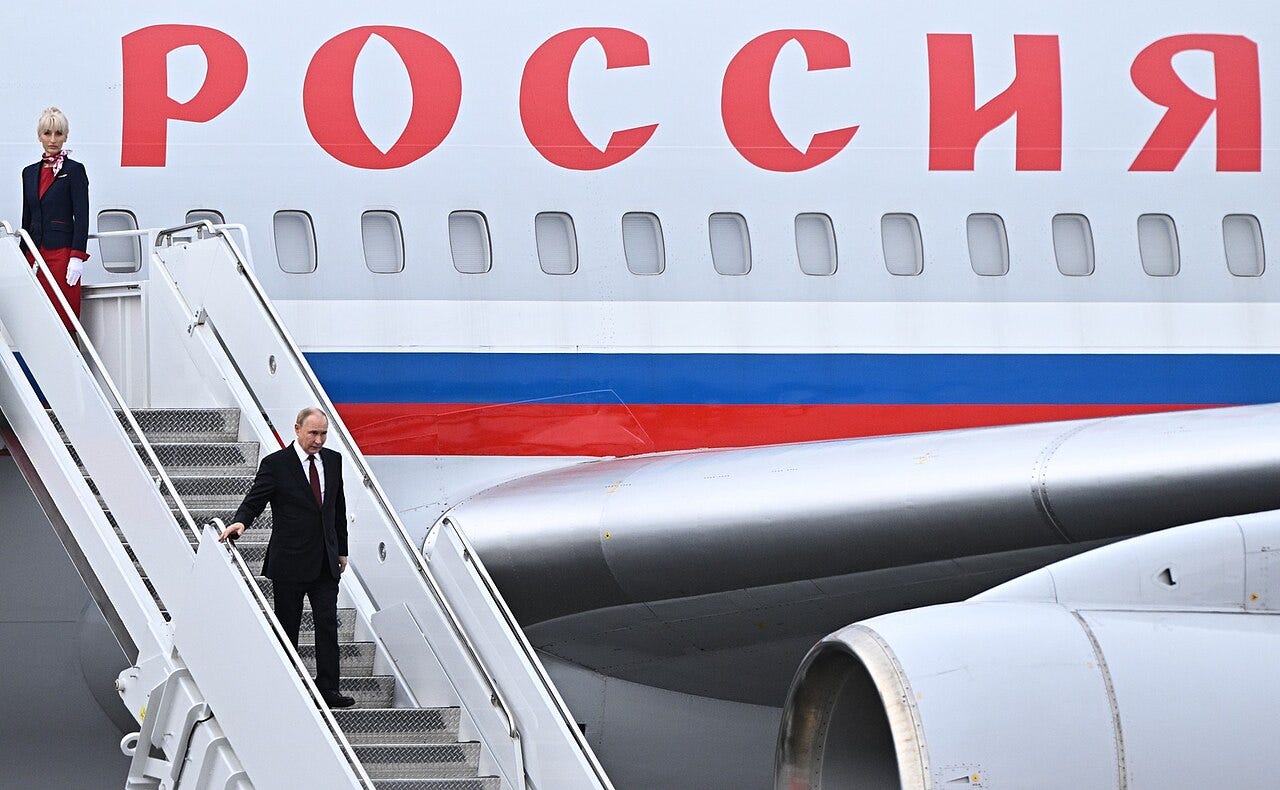
This weekend, we witnessed one of the most crucial diplomatic summits in recent history. Vladimir Putin and Donald Trump, both of whom have not met since the Helsinki Summit of 2018, convened in Anchorage, Alaska to discuss a possible diplomatic resolution to the ongoing war between Russia and Ukraine.
Of course, Trump’s relationship with the Russo-Ukrainian conflict has been volatile from its start. Before taking the presidency, he claimed he could resolve the crisis in less than a day, while half a year later he now defines it as perhaps the most complicated international crisis which his administration has been tasked with mediating.
Trump’s evolving relationship with the Ukrainian and Russian presidents is of equal importance. In the early months of his presidency, Trump approached Volodymyr Zelensky with a level of skepticism and Putin with an added layer of patience. The fiery Oval Office meeting aside, the White House probably adopted this policy to probe for the source of the Russo-Ukrainian deadlock. Upon realizing that Russia remained the primary obstacle to peace, Trump’s harsh rhetoric against Ukraine subsided, and he has since adopted a more aggressive stance against what he sees as Russia’s empty promises.
Mind Games:
It was in this context that the Trump-Putin summit in Alaska was organized. The White House, threatening to impose yet another round of sanctions on Moscow, essentially forced Putin into a meeting that in Russia’s eyes would be the only way to prevent further economic isolation. While Trump issued a number of threats against Russia in the event that a ceasefire were not to be reached, it was clear that both sides held pessimistic outlooks going into the meeting due to Russia and the West’s seemingly irreconcilable preconditions for a peace deal.
Upon his arrival in Anchorage, Putin met with Trump at Joint Base Elmendorf Richardson, an outpost quite ironically used by the U.S. to counter Russian aerial incursions into Alaska, and was greeted by a red carpet lined with a wide array of state-of-the-art American F-22 fighter jets, all of which are actively used for that same purpose. As he disembarked his plane, Putin was further greeted by a B2 bomber squadron flyover. Of course, Trump’s display of this hardware was no mistake. By showing to Putin a host of aircraft which could probably level the entirety of Moscow, Trump was undoubtedly asserting America’s position of strength over their Russian counterparts.
Putin, on the other hand, performed numerous gestures aimed at softening the resolve of Trump and the American delegation. Prior to his arrival in Alaska, Putin lay wreaths at a Russo-American monument in Magadan, Siberia which commemorates the aerial transit of American material aid to the Soviet Union by means of Alaska during the Second World War. In Anchorage, Putin also visited the local Russian Orthodox Patriarch. All of these acts, which were subsequently referred to in Putin’s amicable speech at the diplomatic conference, clearly served to gain the favor of an American president who he undoubtedly seeks to manipulate into making greater concessions to the Kremlin.
Nothing Ever Happens…
Or so the saying goes. For all the gravitas surrounding the Trump-Putin summit, no concrete ceasefire, or even details regarding a future peace agreement, were actually announced following the closed-doors meeting between the Russian and American delegations.
What we do know is that Trump has seemingly dropped his ultimatum for Russia to enact an immediate ceasefire, instead suggesting that a permanent and decisive peace deal should be reached instead. He also claimed that a number of disputes regarding such a settlement had been reached, without disclosing what exactly such matters were. According to both parties, we can expect a number of subsequent meetings in the coming weeks between Russia, the United States, and even Ukraine to advance these efforts at peace. In fact, Zelensky himself is already slated to take a second (and hopefully more productive) visit to Washington later this month.
A number of unanswered questions still remain in respect to the efforts at peace in Ukraine. First of all, Russia has not yet signaled a genuine desire for peace, but rather what may very well be an opportunistic effort to buy more time to attack Ukraine without further enraging the United States. Even if Russia so desires peace, which they will have to reach at some point, it’s probably safe to assume that Putin and his allies will only bring the fighting to a close if it is done on their terms or, conversely, if the Russian war machine is forced to stop. Whether the ongoing talks between Washington and Moscow align with such a deadline is yet to be seen.
We must also consider the lingering divide between Russia, Ukraine, and the European Union. Continental Europe and Ukraine, for that matter, have failed to make the same overtures which the Americans have towards Russia, both out of their relative diplomatic weakness and, in the case of Brussels, an added layer of disillusionment with the reality of the situation in Eastern Europe. Unless the European Union and Russia can make large strides towards common ground in the coming weeks, it is likely that Brussels will be sidelined to Washington’s interests for the foreseeable future.
While Ukraine will undoubtedly have at least some say in any agreement over its future, its ability to gain a favorable diplomatic situation is inextricably tied to that of Europe. And, if recent events have revealed anything, it’s that both of the Northern Hemisphere’s Great Powers now see Europe as an obstacle to achieving their respective goals.
Most informative!