

Romania and NATO's Eastern Flank
The expansion of the Mihai Kogălniceanu Airbase in Southeastern Romania represents a broader shift in European defense leadership from Western to Eastern Europe.

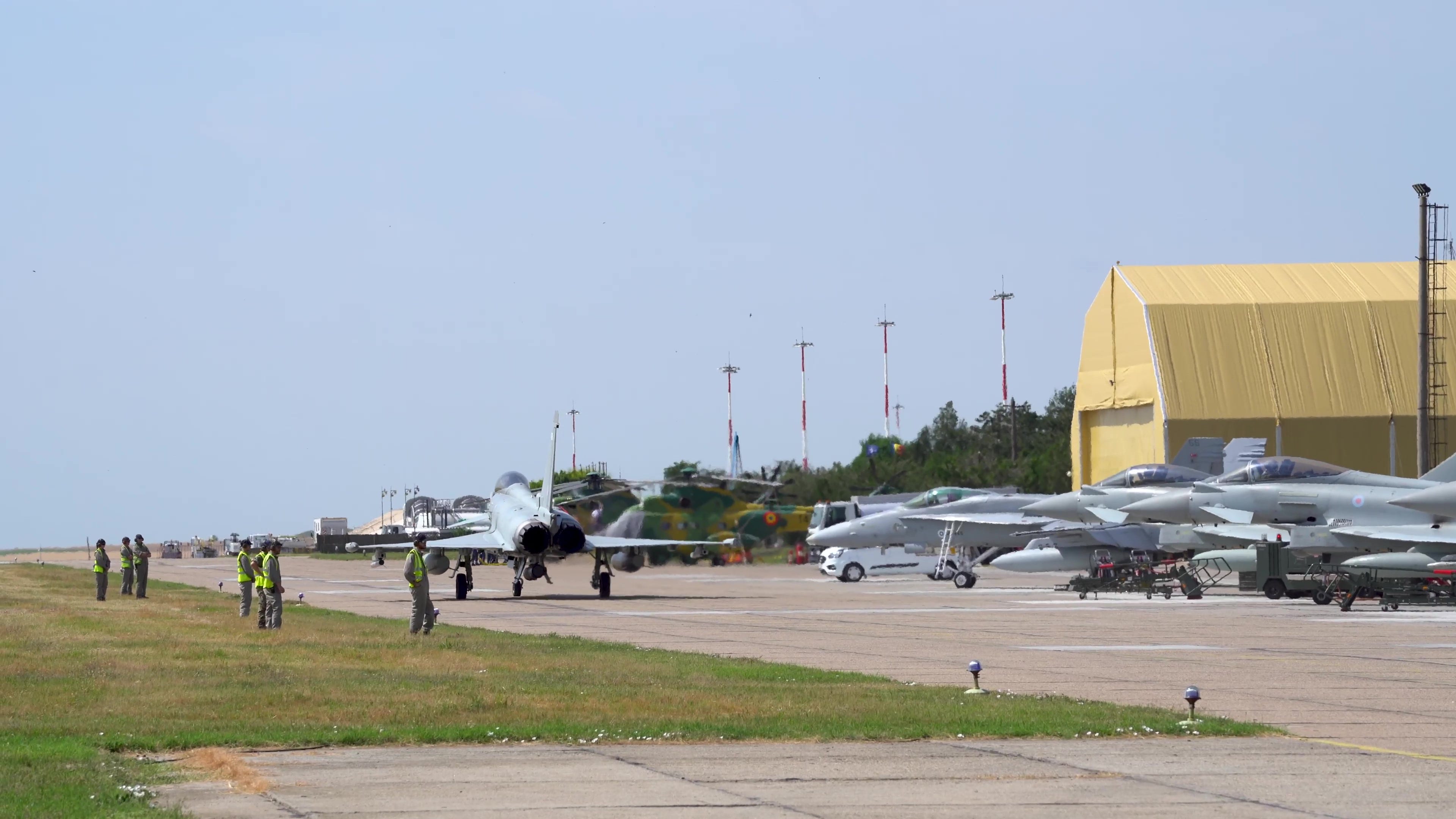
The Black Sea has long been a region of vital strategic importance on the fringes of Europe. As far back as the Roman conquest of the Crimea two millennia ago, it has sat as a coveted trade corridor between East and West, along with a gateway to imperial expansion in Ukraine, the Balkans, and elsewhere.
This trend has continued with full force in the present day. The expansion of NATO after the fall of the Soviet Union has given the collective West a foothold in nations like Bulgaria and Romania which, along with Turkey, comprise much of the Black Sea’s southern waters. Furthermore, Russian apprehensions over Ukrainian and Georgian accession into NATO, two nations along this same body of water, ultimately led Moscow into a series of aggressive actions that overwhelmingly define the current geopolitical situation in Russia’s periphery.
Naturally, Moscow views the Black Sea as vital to Russia’s national security and to the maintenance of the nation’s historical status of dominance in the region. To the Russians, the prospect of NATO expansion into then-Ukrainian controlled Crimea, or even into Georgia in the South Caucasus, would have allowed Western and American naval vessels to gain strategic dominance in the region. This concern was first manifested with the 2014 Russian seizure of Crimea, whose warm-water port of Sevastopol holds the keys to controlling the entire region. In 2022, along with a variety of other factors, Russian concerns over NATO expansion led to Moscow’s occupation of much of southern Ukraine, effectively relegating Ukraine’s maritime access to the embattled port city of Odessa.
Russia, despite its setbacks in Ukraine, has gained strategic dominance over the Black Sea through its occupation of almost all of Southern Ukraine. Such a reality naturally presents the NATO-aligned nations of Turkey, Bulgaria, and Romania with significant cause for concern.
NATO’s response to this new geopolitical reality has proceeded in tandem with a general effort at militarization throughout Europe, particularly in those nations which lie closest to Ukraine. The most concrete example of this effort has been the unprecedented expansion of the Mihai Kogalniceanu airbase in southeast Romania where the Danube river meets the Black Sea. To Romania, such a project represents a tangible reinforcement of NATO’s security guarantees for itself, while to NATO as a whole it provides a valuable asset in countering Russia’s expansion into Crimea, the Black Sea, and Southern Ukraine.
Since serious expansion commenced in 2024, 2.4 billion USD have been allocated to the addition of new runways, military infrastructure, and aircraft. By 2030, the base will be almost 12 square miles and 10,000 military and civilian personnel. These figures drastically exceed the scale and capacity of the United States-operated Ramstein Air Force base in the Ruhr region of Germany, which has remained the most important NATO base in Europe ever since the days of the Cold War.
In fact, much of the inventory for NATO’s new Romanian airbase is being directly transferred from Ramstein, which now sits thousands of miles from Europe’s security pressure points and in a nation already notorious for its lack of defense spending.
The pivot of NATO military assets on such a large scale from Germany to Romania and the other democratic nations of Central and Eastern Europe represents a general shift in European security dynamics which has been supercharged by the Russian invasion of Ukraine. With Russia once again resorting to direct military expansion and the NATO-aligned nations of Eastern Europe demonstrating a far greater degree of defense initiative compared to their Western European counterparts, it makes since in both political and strategic terms that the small nation of Romania now lays host to the heart of NATO’s eastern flank.
While France, Germany, and Great Britain command the strongest economies on the continent, the shifting geopolitical dynamics of 21st century Europe have shifted the focus from West to East. Whether Europe’s traditional great powers will choose to adapt to this new reality is another question in and of itself which the next decade will do great volumes to reveal.