

The Paris Trap
How the Franco-Turkish rivalry stands to compromise Armenia's Westward pivot

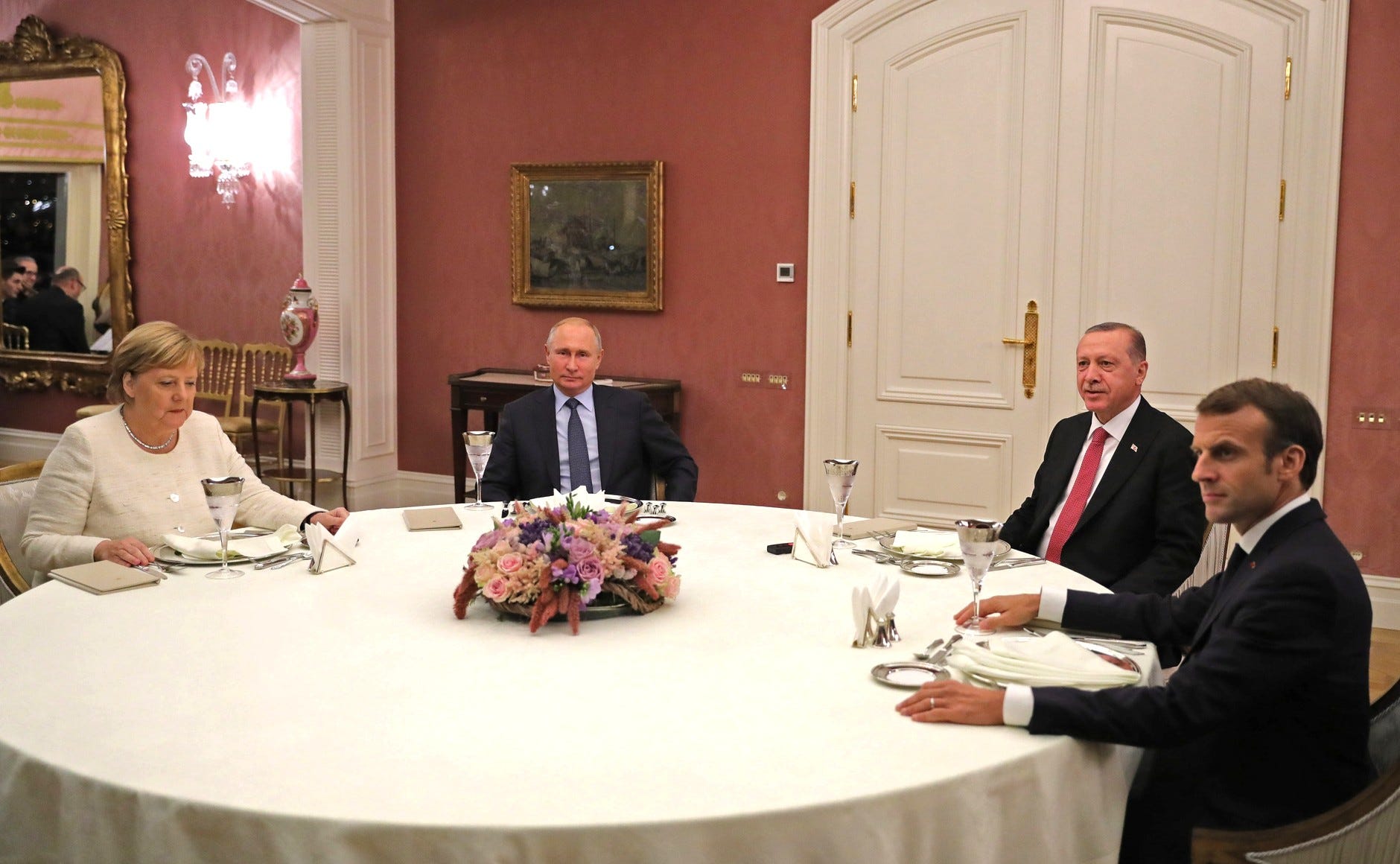
Nikol Pashinyan’s decisive victory in Armenia’s June 2026 Parliamentary Elections represented a major step forward in Yerevan’s efforts to draw back its ties with Russia in favor of reconciliation with Turkey and Azerbaijan, its longtime-adversarial neighbors whose geographic centrality between east and west could finally give landlocked-Armenia the overland connection to Europe that it has long desired.
Pashinyan’s pragmatic electoral platform was asking a great deal from an Armenian populace that has long seen its Turkic neighbors as irreconcilable enemies, making his victory all the more of a mandate for drastic change in Armenia’s regional outlook.
Building on momentum from a landmark peace agreement tentatively signed between Azerbaijan and Armenia in Washington D.C. in August of 2025, Baku and Yerevan have continued to draft the details surrounding a decisive deal that could lead to the normalization of Armenian-Azeri diplomatic ties and to the opening of the countries’ long-closed land border.
This initiative extends far beyond the symbolic: by allowing for trade to flow freely across the east-west axis of the South Caucasus, supply chains between Central Asia and Europe would be greatly strengthened at a time when global trade routes elsewhere are falling into increasing disarray. The emergence of this “Middle Corridor” between Europe and Central Asia would challenge Russia’s longtime dominance in the region, bring newfound prosperity to the South Caucasus, and also cater to the economic interests of Europe, the United States, and others.
Beyond the Azeri-Armenian detente lies another critically important player: Turkey. As Azerbaijan’s most important ally and Armenia’s uneasy neighbor to the west, Ankara’s concurrent efforts to normalize its strained ties with Yerevan are critical to the execution of a final deal between Azerbaijan and Armenia—not just because Turkish backing of such an agreement would define the scope of the treaty’s integrity, but also because the overland border between Turkey and Armenia must also be opened for the South Caucasus to receive the full array of economic benefits promised by the “Middle Corridor.”
So far, the signs seem to be encouraging. Turkish President Recep Tayyip Erdogan issued an unprecedented “congratulations” to Pashinyan upon his electoral victory, and the upcoming July 2026 NATO Summit in Ankara could precipitate an ideal diplomatic opportunity for the opening of the Turkish-Armenian border, a move the United States will be sure to advocate for as a corollary to Trump’s personal efforts at mediating the ongoing peace process between the South Caucasus’ two formerly-belligerent neighbors.
Currently, the most apparent obstacle yet to be overcome in the Armenian-Azeri peace process surrounds Baku’s demands that Yerevan amend sections of its Constitution that contain rhetoric it deems revisionist. Though regional threats from Russia, Iran, and Armenia and Azerbaijan themselves could all complicate these matters further, the momentum for reconciliation seems to have crossed a threshold that may outweigh some of the initiative’s potential fragilities.
In this case, however, the greatest threats to a resilient Armenia-Azeri peace deal may lie in the unknown rather than in the familiar…
The Caveat Nobody is Talking About:
Amidst the backdrop of this fragile yet promising momentum, another latent threat to regional peace looms. Amidst Armenia’s Westward pivot, Yerevan is concurrently strengthening strategic ties with two rival states: Turkey and France. While Yerevan is pursuing closer alignment with both with the same ends of “Westernization” in mind, the longstanding enmity between Ankara and Paris risks trapping Yerevan within the crossfire of a rivalry whose depth and breadth across the Mediterranean Basin knows no bounds.
If Armenia becomes an exploitable political pawn of either Turkey or France—or a battleground for their diverging strategic interests in the Near-East—Armenia’s already-fragile pivot Westward could come under a salvo of multi-vectored foreign pressure which the country is simply not prepared to confront.
While the risk presented to Armenia by the Franco-Turkish rivalry is neither formidable in scale nor inherently destabilizing in its own right, Armenia’s potential failure to balance itself between the interests of France and Turkey represents a second-order fault line whose lack of foresight could prove to be a dangerous obstacle to Armenia’s geopolitical outlook in the coming months and years.
Armenia’s pivot away from Russia has proceeded through two vectors—each with the same ends, but each through different means. One of these avenues has been through direct reconciliation with Turkey and Azerbaijan—often mediated by secondary parties like the United States—with the ultimate goal of opening overland trade routes through these countries to thereby access Central Asia and the European common market, a development which could theoretically wean Yerevan off of the Russian economic dependency that has long plagued its existence.
The second avenue has been through Armenia’s engagement with Europe itself, a partner it sees as its next-best patron in a world after Russia. In May of 2026, Armenia held its first ever bilateral summit with the European Union in Yerevan, a meeting which brought several high-profile European leaders to the South Caucasus to voice their support for the country’s ongoing Westernization efforts.
This convergence of interests is comprised of more than words: Armenia is currently in the preliminary stages of submitting a formal bid for E.U. Membership, and Brussels has significantly increased its annual expenditures of foreign aid to Armenia in an effort to cement the country’s efforts at democratization and economic detachment from Russia.
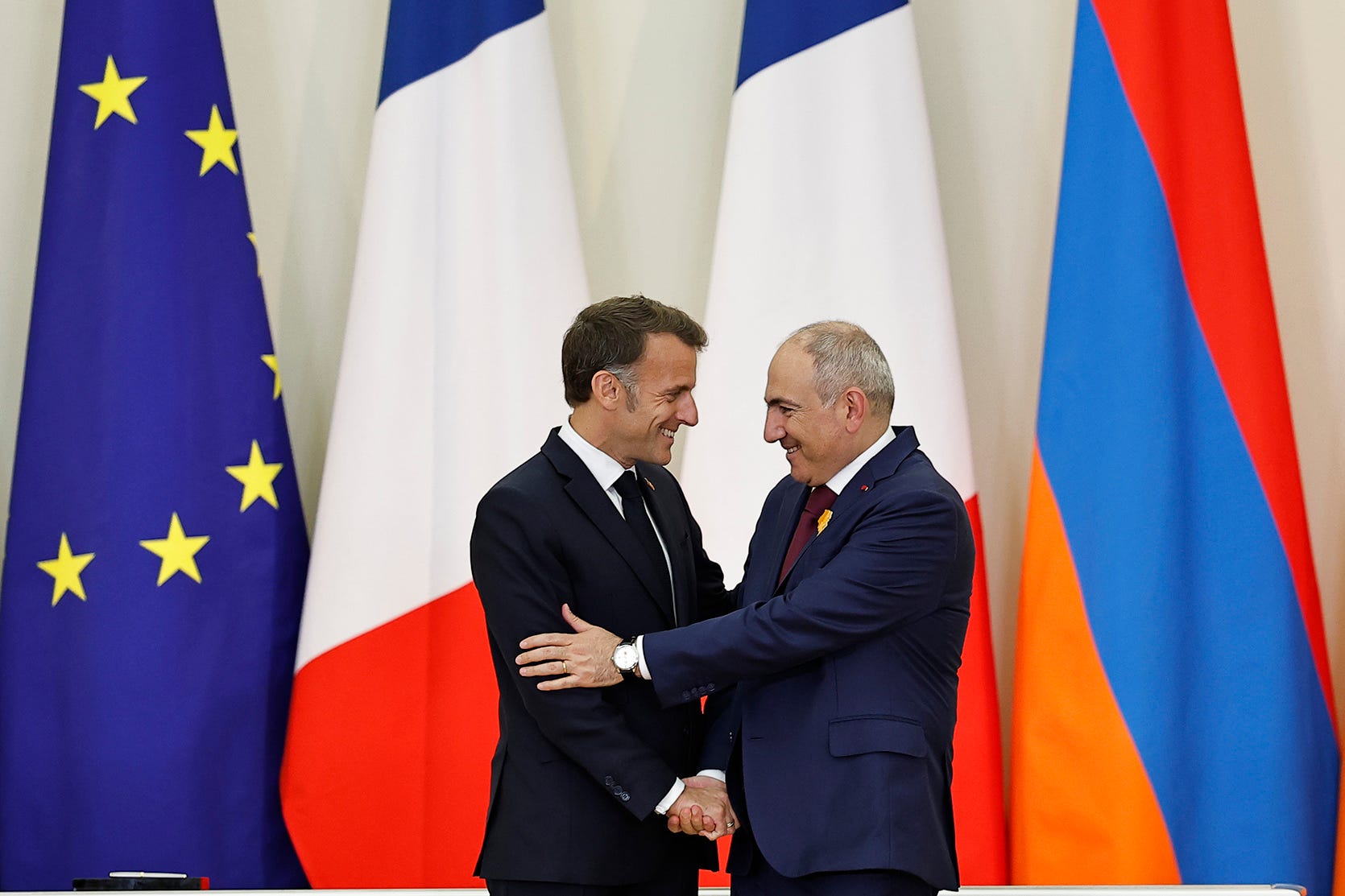
More than any other country in Europe, France remains the most ardent in its support form Armenia’s Westward pivot. This stems not only from Paris’s growing initiative to become Western Europe’s center of geopolitical mass, but also from a historically-grounded Franco-Armenian relationship that is in large part supported by the presence of a very large Armenian diaspora within France.
Amidst Armenia’s Westward push, France has doubled down on its efforts to welcome the country into its sphere with open arms. In May of 2026, Armenia and France elevated their diplomatic relationship to that of a “strategic partnership” during a high-profile visit by Emmanuel Macron to the Armenian capital.
While France may be setting the standard for Armenia’s emerging relationship with Europe, Paris may also pose an inadvertent risk to Armenia’s other, arguably more important avenue of Westernization: its peace process with Turkey and Azerbaijan.
In oversimplified terms, France and Turkey maintain a strained relationship. As the Meditteranean’s two strongest land and maritime powers, the two nations and their markedly diverging worldviews hold a relationship which can be wholly classified as a strategic rivalry. France and Turkey have armed opposing sides in conflicts in Syria, West Africa, and Libya. France is also a staunch opponent of Turkish accession to the E.U., a major arms supplier of Armenia, and an avid proponent of Greece and Cyprus’s disputed maritime claims with Turkey in the Eastern Mediterranean Sea. To top that off, Erdogan and Macron simply do not get along on a personal level.
Why it Matters:
To categorize Armenia’s especially close ties with Turkey’s French rival as a risk to its ongoing peace efforts may seem like a rather abstract claim, but it might just be the grounds for crisis that nobody is willing to entertain. The reason stems not from Armenia’s own behavior, but rather from the nature of the Franco-Armenian relationship within the context and perception of Paris’s tense rivalry with the Turks.
Franco-Turkish disputes throughout the Eastern Mediterranean and Near East have prompted Paris to adopt what one may describe as a policy of containment against Ankara—especially within the eyes of a Turkish nation that sees itself as “surrounded” by adversaries.
France’s policy of Turkish containment finds its most striking example in Paris’s arming of Greece, Turkey’s oldest and greatest rival in the Eastern Mediterranean. Paris has also put pressure on Ankara through its efforts to shore up influence in Cyprus, a divided island whose southern half is a member state of the European Union and whose northern half is a largely-unrecognized nation known as the “Turkish Republic of Northern Cyprus.” Of course, Turkey is the one country that recognizes the Republic’s legitimacy.
By establishing a hard-power presence in these two Greek-speaking nations, France has sought to challenge Turkey’s claims to maritime supremacy within the Aegean and Eastern Mediterranean Seas. When Cyprus came under fire from Iran-linked missiles in early 2026 linked to the ongoing war in the Middle East, Paris undoubtedly took the opportunity as grounds for the deployment of many of its own naval forces to the region, including the Charles De Gaulle nuclear-powered supercarrier. France did this not only to safeguard Europe’s eastern flank against Iran and Hezbollah, but also to keep the Turks from trying to do the same.
France’s ties with Greece have culminated in measures as pronounced as talks for the forward-deployment of French nuclear warheads to Greek territory. Again, while Paris may claim that such an initiative is simply one-in-the-same with its efforts to assume leadership over Europe’s defense against Russia, Greece seems a little too far from Moscow and a little too close to Ankara to meet France’s purported claims…
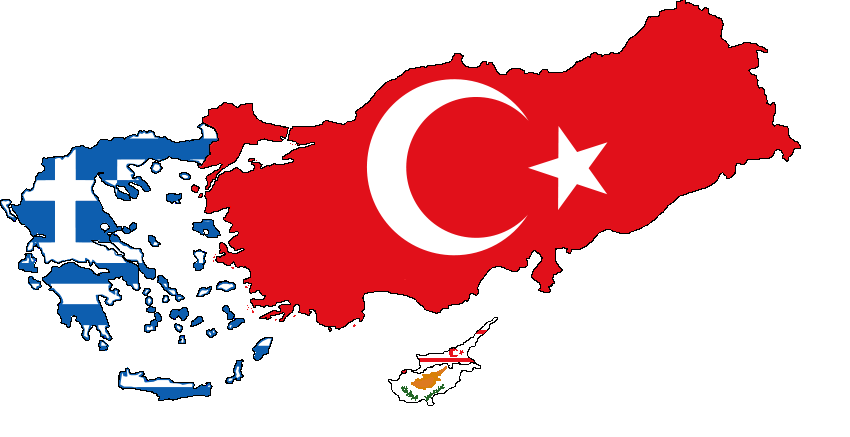
Beyond the Eastern Mediterranean, France’s de-facto policy of Turkish containment has shaped the nature of numerous other Franco-Turkish confrontations throughout the Near East. While French assistance to Kurdish and other anti-Turkish forces in the Levant is far less of a threat to Turkish power projection than that posed by the Greco-French alliance, Ankara’s well-grounded fear of French containment around its periphery have led the country to respond to these concerted threats with disregard for how it may compromise its relationships with NATO and the West.
Unfortunately, Armenia’s alignment with France may be confounded through the exact same lens of containment. Obviously, Armenia is far too small and isolated to present any meaningful political or military threat to Turkey—it is “surrounded” in its own right, after all. However, France’s unusually-pronounced efforts to garner Yerevan’s favor bear a resemblance to Paris’s concurrent efforts to build a presence along Turkey’s other frontiers.
Armenia certainly holds no intentions for its Westward pivot to become fragmented by the diverging interests of France and Turkey, though the very perception of such a divergence—even if ungrounded—could create suspicion within a Turkish-Armenian peace process that is already very fragile.
The Present Risks:
Luckily, the first-order risks associated with the “Paris Trap” are not substantive at the present moment. Even if Turkey sees France’s behavior towards Armenia as subversive and opportunistic, it’s unlikely that it will see a small, landlocked, and in many ways dependent Armenian state as a sustainable member within any French-led containment efforts to surround Ankara from both east and west.
The risks, however, could lie within the realm of excuses. If the peace process between Armenia and its Turkic neighbors stagnates for any other reasons, Ankara could utilize the narrative of French containment by means of Armenia as a convenient excuse for the derailment of peace efforts. While this outcome represents an extreme-case scenario, Ankara could also deploy the narrative as grounds for the weakening of European-Armenian ties in favor of a more one-sided dependency between Turkey and its much smaller Armenian neighbor.
On the flipside, France could find ways of deploying the narrative of “Turkish dominance” within a defenseless Armenian state as grounds for a less Turkish-dominated role within Armenia’s Westernization. Such a development would not only threaten Armenia itself, but also fragment the uneasy European-Turkish consensus on policy towards the South Caucasus as a whole.
Ultimately, it is in both Turkey and France’s interests for Armenia to succeed in a peaceful pivot Westward, a development which would both benefit the Armenian people and expand Turkish and E.U. influence deep into Eurasia. However, these benefits can only arise if both entities maintain their consensus on policy towards the South Caucasus. Furthermore, both major powers must understand their unique and complementary roles within this peace process.
For one, France must understand that the construction of a more favorable Turkish-Armenian relationship forms the foundation for any sustainable cooperation between Yerevan, Paris, and Brussels in the future, since Armenia requires Turkey’s geography to access Europe in the first place. The Turks must also understand that their greatest prize through Armenian detente comes not from the political subjugation of the country, but rather through the fostering of constructive and bilateral economic ties that would thereby open new doors to Turkish power projection in the Caspian Sea Basin.
In essence, both Turkey and France must avoid “winning over” Armenia to their side within the context of the Franco-Turkish rivalry, since this would derail months of hard-earned progress towards peace in the South Caucasus by forcing Yerevan to pick a side in a game that requires both sides.
The rewards of Armenian integration with the West come not from the expansion of rival spheres of influence or the outflanking of strategic rivals, but rather through the opening of new doors for interstate cooperation that never existed beforehand.
The history of the South Caucasus before 2025 was one defined by the former, zero-sum geopolitical beliefs, resulting in the creation of a disputed, war-torn, and isolated region. With all sides now getting a taste of what can come from meaningful reconciliation, the cultivation of a coherent Franco-Turkish footing surrounding the question of Armenia may prove to be a key variable in determining the South Caucasus’s fate as a region of either cooperation and connectivity or of fragmentation and isolation.