

The Polish-Soviet War, Part IV
The Treaty of Riga, the death of Polish Federalism, and the advent of the "20 Year Armistice"

This is the final part (IV) in my series on the Polish-Soviet War of 1919-1921. To read the previous three parts, consult the Historical Digressions database on the website.
The Polish-Soviet War was a conflict whose legacy in the West was largely confounded by fear—not just of a revisionist Russian state, but of Communism. The war-torn governments of Western and Central Europe had far more to worry about than postwar economic recovery: in many places, veterans and disenchanted workers were questioning the social fabrics which had seemingly produced so much violence and austerity between 1914 and 1918. Ruling statesmen were more than aware of these widespread sentiments, giving way to a Red Scare that gave a political entity such as Soviet Russia an element of intangible subversion.
As countries like Germany, Hungary, France, and Britain all dealt with mass strikes (or socialist revolutions) on varying scales, Soviet Russia and its dogmatic calls for the “propagation of global revolution” became a perceived manifestation of domestic social unrest. When Soviet general Mikhail Tukhachevsky claimed that “Over the dead body of White Poland shines the road to world-wide conflagration,” his words were taken seriously.1 In the west, Poland was seen not just as a target of a hostile adversary, but as the last shield separating Western Civilization from continent-spanning calamity.
And thus, when Poland reversed these fears by defeating the Red Army on Warsaw’s outskirts, the West remembered not the full story of Poland’s triumph, but rather the sudden and insurmountable relief associated with the relegation of the Soviet revolution to Europe’s eastern fringes. In what remains the most famous synthesis of the Miracle on the Vistula’s geopolitical ramifications, British diplomat Lord D’Abernon had the following to say:
Had Pilsudski and Weygand failed to arrest the triumphant advance of the Soviet Army at the Battle of Warsaw, not only would Christianity have experienced a disastrous reverse, but the very existence of Western civilisation would have been imperilled…it is probable that the Battle of Warsaw preserved Central and parts of Western Europe from…the fanatical tyranny of the Soviet…On the essential point there is little room for doubt; had the Soviet forces overcome Polish resistance and captured Warsaw, Bolshevism would have spread throughout Central Europe, and might well have penetrated the whole continent.2
Of course, D'Abernon’s observations did have their bearings. Tukhachevsky—along with Lenin, Dzerzhinsky, Trotsky, and many other prominent Soviet figures—had verbally associated the invasion of Poland with the notion of propagating socialist revolutions in Germany, Hungary, Austria, and other Central European states to Poland’s west and south. Words aren’t everything, however. To the Soviets, Communist rhetoric was just as much a tool of ideological posturing as it was a facade of the same imperialist foreign policy that had reigned supreme during the time of the Tsar. And, while Poland’s victory at Warsaw may have been self-indicative in many ways, it could not salvage that which the Polish-Soviet War had been fought for in the first place: Polish Federalism.
D’Abernon isn’t necessarily getting the story wrong. However, his definitive interpretation of the Polish-Soviet War fails to uncover many of the ulterior, subtle, and long-term ramifications of the Polish-Soviet conflict, whose conclusion would in many ways reshape Eastern Europe to the same extend as had the Versailles settlement a few years prior.
The Death of Polish Federalism:
In the months following the Soviet retreat from Poland, Polish and Soviet officials met in the nearby Latvian capital of Riga to begin formulating a decisive peace agreement between the warring parties. By the start of 1921, the Soviet countryside had been thoroughly devastated by years of Civil War and foreign interference. While the White Army had by now been relegated to the fringes of Russia, Moscow was willing to pay the Poles with land for the peace they so desperately needed— Russia was embroiled in famine, relations with the West were still precarious, and the “New Economic Policy” of Lenin had thus far failed to lift the country out of an unprecedented fiscal crisis.
From the very beginning, Pilsudski’s primary war aims necessitated the liberation of Belarus and Ukraine from the Soviet sphere. By 1921, however, internal conditions within Poland had largely derailed Pilsudski’s federal vision. Roman Dmowski’s National Democrats, while initially sidelined from Polish grand strategy, had emerged as the dominant political faction in Poland on account of war fatigue and a straightforward approach to national identity that resonated with amongst the ethnically homogenous regions of Congress Poland.
Furthermore, the most recent elections for the National Assembly had been made at the peak of the Soviet advance earlier that summer, when Pilsudski was mired in criticism and much of the pro-Federalist regions in Eastern Poland were under Bolshevik occupation. The National Democrats, who favored a policy of “integral nationalism” that would prioritize an ethnonationalist Polish state over the early-modern federalist approach pursued by Pilsudski, quickly became a force which Pilsudski had to compromise with in order to retain his power, leading to their relative dominance in foreign affairs by the end of 1920.3
It must also be noted that, in spite of the Polish victory at Warsaw and the reclamation of much of the Borderlands, the ideal of Federalism was largely seen as having been defeated long before the winter of 1920. The Kyiv Expedition, then regarded as the most pronounced manifestation of Pilsudski’s federalist ideal, was regarded as a complete and utter failure. Poland’s overextension in Kyiv had indirectly allowed for the Red Army to make an appalling dash for Warsaw that had shattered hopes in Ukrainian statehood and had nearly spelled doom for Poland as an independent and sovereign entity as well.
A Falling Out with Lithuania:
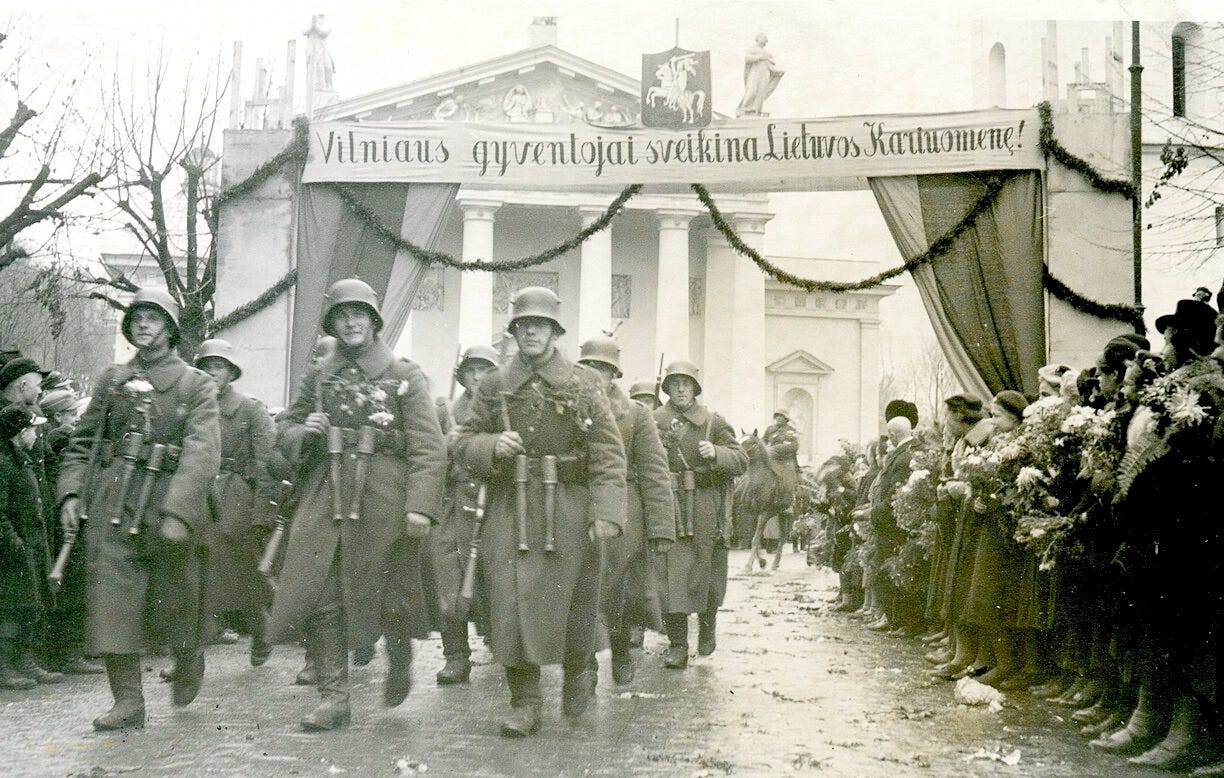
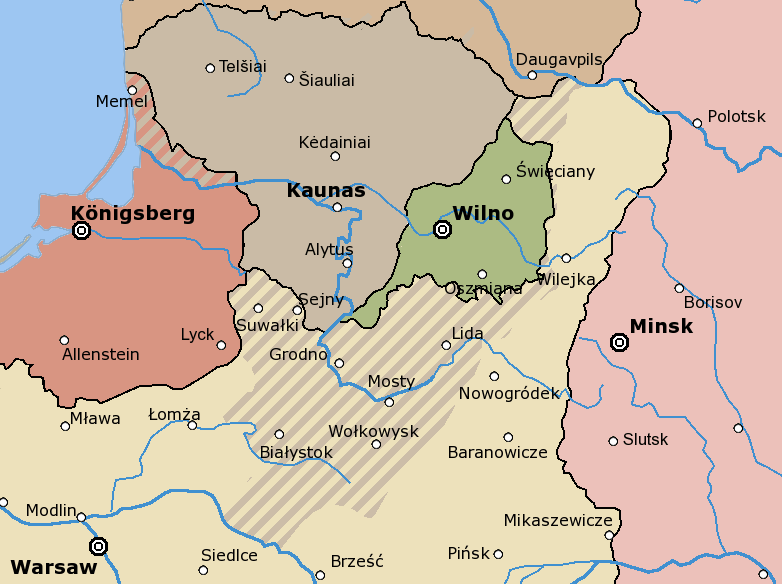
The federalist project’s regression in Lithuania was no less concerning. Despite Pilsudski’s promises of Polish-Lithuanian unity in early 1919 to the people of Wilno, the ethnonationalist Lithuanian regime in Kaunas had used the incident to forge a modern Lithuanian identity that was separate from the ancient Grand Duchy and its unity with Poland. This was most especially exemplified through Kaunas’s occupation of Wilno in the summer of 1920, even though the city was largely Polish, Jewish, Russian, and German in its ethnic composition. Then, following the Polish counteroffensive back into Belarus and West Ukraine in late 1920, Pilsudski took the final step in destroying any prospect of federal unity with Lithuania by seizing the city. While it may seem counter-intuitive for Pilsudski to have undermined his own federalist aspirations, by this point in 1920 the Polish ethnonationalists had so consumed Poland’s body politic that he believed fulfilling the strategic necessity of annexing the city would only precipitate that which was already inevitable.
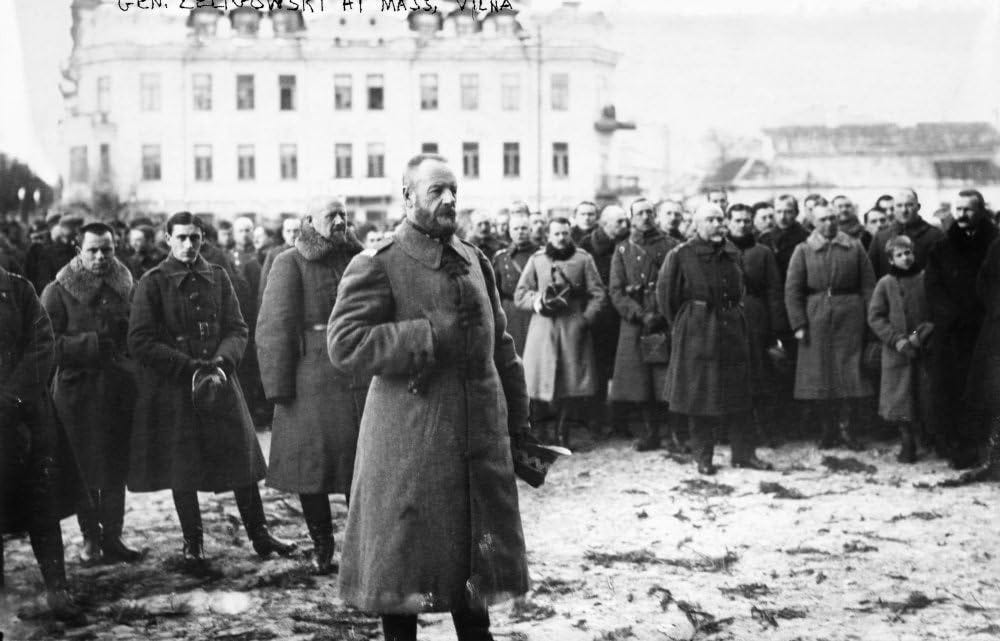
That October, General Zeligowski was sent by Pilsudski to recapture Wilno by force. Upon taking the city, a canton of “Central Lithuania” was declared. However rooted in federalism this aggressive move may have been, the seizure of Wilno played directly into the hands of the National Democrats by forcing Pilsudski to recognize the limitations of his federalist policy. While Pilsudski saw annexing Wilno as integral to the formation of a multi-ethnic Polish state, it ironically benefited National Democrats who sought to annex Polish-majority lands like Wilno at the expense of its neighboring states, in this case being Lithuania.
The Lithuanians were obviously furious about the annexation, while many of the residents of Wilno saw Poland’s actions as inconsistent with the ideals of the Grand Duchy of Lithuania. In the National Assembly, the proposition of a canton of “Central Lithuania” was promptly struck down, making the capture of the city seem motivated truly by Polish nationalism rather than the Federalist ideals of Pilsudski. In effect, Pilsudski inadvertently solidified the Polish-Lithuanian relationship as one defined by ethnic terms rather than historical ones, making any prospect of unity void.
By annexing the Polish-inhabited yet Lithuanian-identifying city of Wilno, the National Democrats had gained the ethnically-Polish state which they so desired while also dismantling any sense of unity with the Lithuanians, which now saw themselves as ethnically opposed to the Poles. The “traditional patriotism” and multinationalism of Pilsudski’s Borderlands had not been defeated on the battlefield, but in the hearts and minds of Poland-Lithuania’s former inhabitants.4
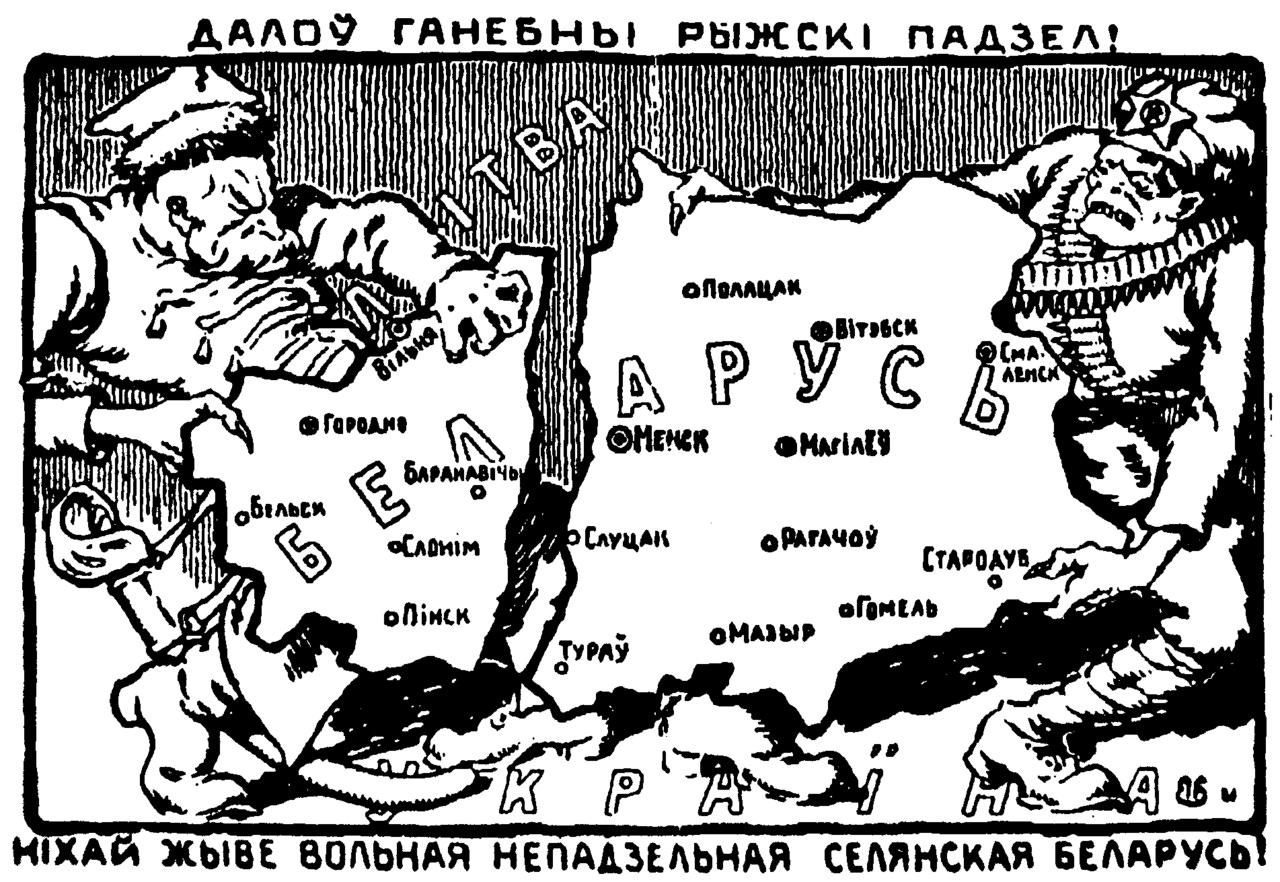
In Ukraine and Belarus, similar sentiments prevailed. While both nations had been promised independence under Pilsudski’s federalist framework, the National Democrats relegated the countries to the same status of imperial partition that had prevailed during Tsarist times. While the treatment of minorities in Polish-occupied Belarus and Ukraine was generally better than that experienced under the genocidal regime of Joseph Stalin, serious tensions between Poles and the minority populations which they occupied would give way to the creation of organizations like the Ukrainian Insurgent Army (UPA) that would sow great instability in Eastern Poland and West Ukraine during the Second World War.
The Treaty of Riga:
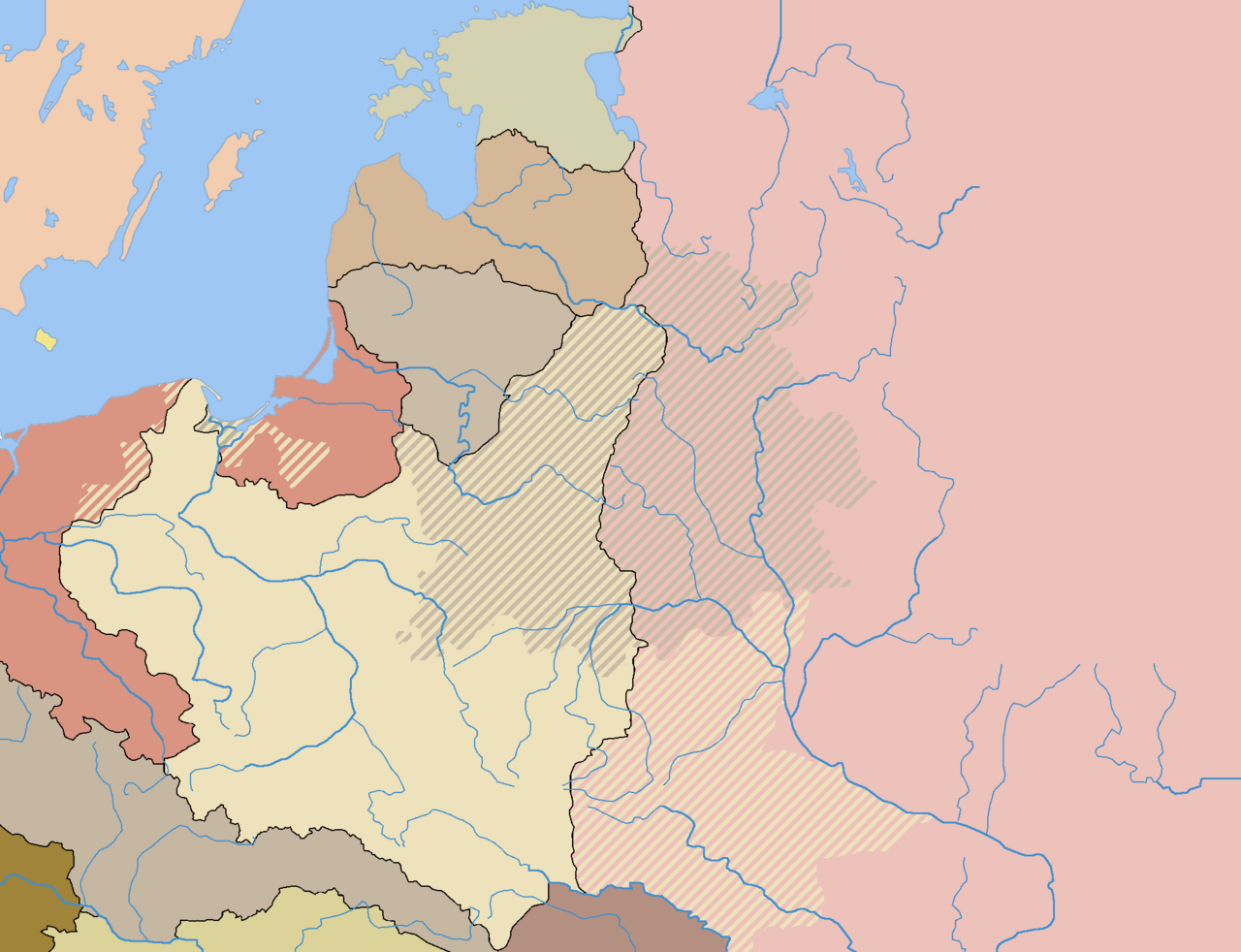
It was in this context that Poland and Soviet Russia would agree to a peace deal to end the Polish-Soviet War. The Poles, while recapturing cities as far east as Minsk, were forced to acknowledge the defeat of Federalism which had been precipitated by the Ukrainian fiasco. Furthermore, winter was fast approaching, and neither the Soviets nor the Poles had the appetite for further fighting over the Borderlands. Poland also sought to stabilize its tense relationship with the West in regards to its eastern expansion, as close nominal ties with Paris and London would be necessary to avoid a regression into further political isolation.
Almost immediately after the Riga Conference had begun, the National Democrats–now in control over Polish policy–involuntarily ceded Minsk and much of Belarus back to the Soviets, even though it was still occupied by Polish troops. This action effectively marked the death of the Federalist policy, with Pilsudski himself declaring that the negotiations at Riga were an “act of cowardice.”5
The primary elements of the Riga Treaty were territorial. The Poles annexed East Galicia, Wilno, Volhynia, and approximately the western half of Byelorussia, an agreement which forced both the Poles and Soviets to make hefty concessions.6 For one, Lenin’s aspirations of spreading the revolution into Poland, and perhaps beyond, were staunchly defeated. The French “Cordon Sanitaire” was in theory enacted, with the Bolsheviks now being isolated from much of continental Europe. On the other hand, the failure of Pilsudski’s federalist idealism was codified into international law, a development which the National Democrats viewed with great approval.
Among Poland’s anti-federalist politicians, figures like Wincenty Witos declared Riga to be an agreement which would eliminate “the causes of all conflicts” with Soviet Russia, which they believed would have been perpetually antagonized under Pilsudski’s federalist aims. Similarly, Jan Dabski declared the treaty to be “a peace of understanding” that would secure Poland’s status as an independent power in Eastern Europe. The Soviets, while obviously resentful of the Treaty’s parameters, welcomed the offer of peace to its west as beneficial to the nation’s future stability.7
For Poland, Riga would be remembered as a treaty which dismantled the country’s only viable security architecture for a hostile Interwar environment. While the National Democrats believed that Pilsudski’s federalist system of collective security could be successfully replaced by strong ties with Britain and France, history now shows that these empty alliances left Poland isolated and on its own when Soviet Russia and Germany invaded the country in 1939. In many ways, Riga was a forecast on Poland’s fate—20 years early. This lesson continues to haunt Polish foreign policy to this day, wherein the country shows far more concern to the cultivation of its regional rather than international array of alliances.
The Lasting Soviet Impression:
While Soviet Russia’s wartime experience with Poland is often confounded by a verbally-apparent primacy on the Communist ideology, the Russian experience during the conflict was far more influenced by notions of imperial expansion, peripheral consolidation, and nationalistic zeal. Despite Soviet Russia’s anti-nationalist political ideology, these tenets seemed to be inseparable from the country’s civilizational perception of itself—a topic we’ll be sure to circle back around to.
When observing the Russian perception of the Polish-Soviet War, it is important to note that the facts involved were perceptions—not necessarily objective realities. Russia has shown time again that its worldview often comes in a different flavor than the western one, and in geopolitics, diverging perceptions unfortunately tend to outweigh realities to the great detriment of those caught in the crossfire.
While the Soviets initially viewed the war with Poland as a mere extension of the ongoing Russian Civil War, its escalation from a contained conflict in the Borderlands into a full-scale Polish invasion in the opening months of 1920 gave the war an entirely new character among both the Soviet government and its people. Much of this sentiment originated not only from the ethnic differences between Poles and Russians, but also from the very ideology influencing Piłsudski’s actions.
Going back to the Medieval Era, the Poles had historically been one of the greatest rivals of the Russian people, a dichotomy which was only being reignited once more in 1919. Furthermore, the Poles–unlike the White movement–conducted their policy through an inherently anti-Russian programs—most namely Prometheism.8
As Poland sought to weaken Russia’s position in the Borderlands, it often used Prometheist rhetoric to promote anti-Russian sentiment among the region's Belarussian, Ukrainian, and Lithuanian populations. With such a system calling for the weakening of Russia under Polish leadership, some in Moscow perceived Prometheism as a program of Polish “empire-building” at its expense. These suspicions were seemingly heightened by Piłsudski's self-proclaimed intentions of creating a Federation in the Borderlands that would have compromise Russia’s dominance in Eastern Europe.9
Within the context of a largely ideologically-driven Civil War, the Soviets thus saw Poland as an entirely new kind of enemy: one that was not fighting against Bolshevism, but against Russia itself. As the Polish army liberated the occupied peoples of Soviet Russia’s east and issued blatantly anti-Soviet decrees, the Soviet government began to see the emerging Polish offensive as a campaign of imperial expansion.10 A declaration “to all workers, peasants, and honest citizens of Russia” in April of 1920 stated that Poland’s offensive sought “the seizure of all those lands that belonged to Poland 150 years ago,” a clear reference to the territories of the Polish-Lithuanian Commonwealth of the 18th century.11
Unlike Kolchak or Denikin, Piłsudski was seen by many Bolsheviks as a threat to all the peoples of Russia, not just its revolutionaries. To them, the Polish leader sought to permanently weaken and neutralize the nation regardless of its political structure.
By supporting Piłsudski’s offensive, the Entente appeared by extension to be attacking the sovereignty of Russia as well. Russia as a nation, rather than just Communism, was now at stake to some Soviet leaders. Such sentiments would reach their breaking point with Poland's alliance with Petliura’s Ukrainian militias and the subsequent invasion of Ukraine, a campaign which would see the height of Polish expansion, the most pronounced embodiment of the Prometheist doctrine, and the culmination of the West’s alleged “campaign of aggression” against Russia.
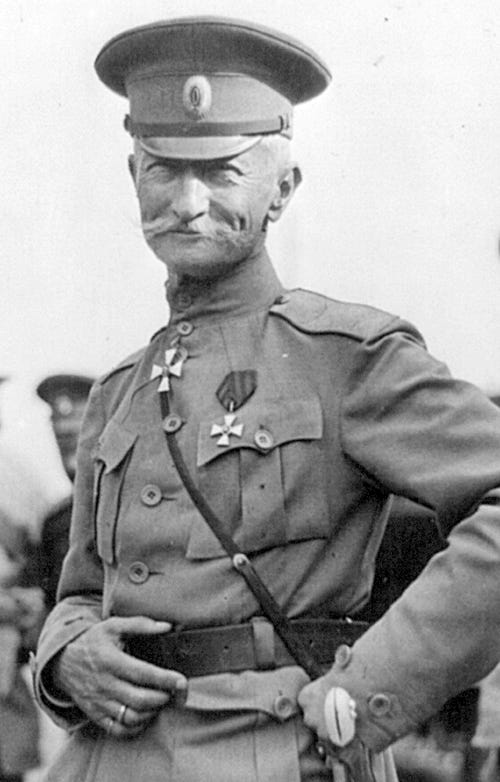
When Polish forces advanced across Western Ukraine and captured Kyiv, the whole of Russia was in shock. The capture of Kyiv, seen by the Bolsheviks as the “birthplace of Russian civilization,” by a non-Russian invader was “nothing less of a national disaster” not only to the tactical efforts of the war with Poland, but also to Russia’s imperial-derived sense of regional supremacy.12 Such an attack had several unprecedented effects among Russia’s imperial elites. Aleksei Brusilov, the most revered Tsarist general from the Great War, pledged his full support to the Soviet cause, citing the necessity for unity “under the Russian national flag” regardless of ideology in the wake of Poland’s “foreign aggression.”
The rhetoric of the Soviet high command towards Poland took on a newfound nationalist and even xenophobic nature as well. Leon Trotsky cited the reason behind the sudden Polish offensive as a “hatred of Russia and the Russians,” and articles were circulated throughout the Red Army condemning the “innate Jesuitry” of the Poles in their assault against the “honorable and open spirit of the Great Russian race.”13 It is possible that the resulting allegations of certain ethnic groups—most namely the Poles and Ukrainians— as being inherently “anti-Bolshevik” during their struggles for sovereignty could have attributed to the unprecedented brutality faced by both groups under Soviet rule in the ensuing decades.
In Moscow, Trotsky outlined the developing crisis in the Ukraine as a war “to defend the fatherland” above all else.14 The capture of Kyiv thus transformed the Polish War into a struggle between the entire Russian nation and the Entente-backed foreign invaders; political ideology, for the first time during the Russian Civil War, had been marginalized to be of secondary importance.
The Polish attack on Ukraine also changed the Russian perspective of Poland's Western backers, who it saw as the primary backers of Pilsudski’s campaign. Chicherin asserted that the Ukrainian campaign was being conducted in "close coordination with the Entente and with the support of France" and with the support of "French materiel."15 While Poland was acting on its own accord far more than the Soviets would care to say, Moscow saw the pattern of Polish intervention in Ukraine as synonymous with the wider Western effort to intervene on the White Movement’s behalf in the Russian Civil War.
Bolshevik radio broadcasts to the masses declared that the "extreme imperialists" of the Entente were in fact the ones "straining all their efforts at the moment to ensure that Poland is plunged into a senseless and criminal war with Soviet Russia."16 Such accusations suggest that–at least in the eyes of the Soviet leadership– it was in fact the Entente that was launching an attack on Russia’s sovereignty through the manipulation of a Polish proxy.
Soviet Russia in the Interwar Period:
The odd catharsis of nationalist fervor and Bolshevik militarism that defined Russia’s response to Poland’s victories in 1920 would define both its experience during the terminal period of the Polish-Soviet War and in its aftermath.
For one, many Soviets saw the invasion of Poland not necessarily as a campaign of Communistic expansion, but rather as one of Imperial conquest against a historic rival whose defeat would not only redeem the “honor” of the Russian people, but deter the West from “using” the Polish nation as a powerful proxy immediately on its western border in the future. Soviet Russia’s failure to decisively occupy Poland following the Riga settlement would protract this sentiment by inducing a heightened sense of political revisionism towards Poland and the Western “Versailles System” that theoretically supported it during the Interwar Period.
With a perpetual, Western-aligned nation on Russia’s doorstep, Moscow would ultimately seek alignment with the ideologically-diverging Weimar Republic to “encircle” the large Polish state that had seized disputed territories from both parties through both the Versailles and Riga settlements. While exploring this subversive relationship lies beyond the scope of this piece, the Soviet-German military collaboration targeted against Poland that would begin after the Rapallo Treaty of 1922 proved a prelude to the notorious Molotov-Ribbentrop Pact of 1939 that would ignite the Second World War in Eastern and Central Europe.
In more abstract terms, The Polish-Soviet War would also serve as a striking prelude to the German invasion of Soviet Russia during the Second World War, known in Russia as the Great Patriotic War. As the name suggests, this titanic struggle against the Germans saw the full force of Russian nationalism employed in defense of the Russian state despite its contradictions with the Soviet doctrine of internationalism.
The Polish invasion of Ukraine was thus a predecessor to the same “national” war against foreign adversaries which would engulf Russia in 1941, which would then give way to a Soviet invasion of German-occupied Central and Eastern Europe in order to create a “buffer” with itself and Western Europe.
Such patterns of Russian aggression aimed at counteracting perceived aggression have become commonplace in the modern era, yet this has not always been the case. Even when examining the Great Northern War, the Crimean War, and the Great War, only the Polish-Soviet conflict represented Russia’s application of a tactical offensive to secure the safety of the state— a precedent which played to Eastern Europe’s tragedy during the Stalinist occupations of the Cold War and during the Russian invasion of Ukraine in the present day, both of which have been conducted to “halt” a perceived threat of Western encirclement by means of “pre-emptive” aggression.
In his notorious essay On the Historical Unity of the Russians and Ukrainians published months prior to the Russian invasion of Ukraine, Vladimir Putin himself referred to the Polish-Soviet War as a conflict which not only galvanized this uniquely Russian worldview, but saw the “weaponization” of Ukraine by a foreign power to Russia’s detriment. While Poland was undoubtedly liberating Ukraine as a matter of regional protection rather than eastward expansion, the Soviets thought otherwise. That very divergence in perceptions is important because it is actively fueling a Russian worldview that necessitates the complete and utter capitulation of Ukraine in the present day.
As such, the long-overlooked Polish-Soviet War laid the very foundations for the modern Russian political and ideological consciousness, in which the defense of the state is seen as a justifiable precedent for outwards military aggression. For these reasons, among others, a clear understanding of the Polish-Soviet War is perhaps more important in the present day than ever before.
Norman Davies, White Eagle, Red Star: The Polish-Soviet War 1919-1920 and the ‘Miracle on the Vistula’ (London: Pimlico, 2003), 145.
Viscount D’Abernon, The Eighteenth Decisive Battle of the World: Warsaw, 1920 (London, Hodder and Stoughton Limited, 1981), 8, 11.
Snyder, Timothy, The Reconstruction of Nations: Poland, Ukraine, Lithuania, Belarus, 1569-1999, (New Haven: Yale University Press, 2003), 68.
Ibid, 60-69.
Davies, Norman, God’s Playground: A History of Poland, Vol. II (New York: Columbia University Press, 1983), 295-297.
Peace Between Poland, Russia, and the Ukraine, signed March 18, 1921, Ungarisches Institut München, http://www.forost.ungarisches-institut.de/pdf/19210318-1.pdf.
Wandycz, Piotr S.. “The Treaty of Riga: Its Significance for Interwar Polish Foreign Policy.” The Polish Review 14, no. 4 (1969): 31–36. http://www.jstor.org/stable/25776871, 3-5.
Richard Szawłowski and Hanna Szawłowski, “Polish Sovietology 1918/19–1939,” The Polish Review 17, no. 3 (1972): 3–36. http://www.jstor.org/stable/25777062, 2.
Paweł Styrna, “Defense of Western Civilization or ‘Polish Imperialism?’” The Polish Review 58, no. 4 (2013): 3–27, https://doi.org/10.5406/polishreview.58.4.0003.
Davies, Eagle, 50-51.
Soviet of Labor and Peasant Defense, "Обращение Совета Трудовой и Крестьянской Обороны к рабочим, крестьянам и честным гражданам России," in документы внешней политики CCCP, vol. 2 (Moscow: Gospolitizdat, 1958), 492, https://docs.historyrussia.org/ru/nodes/278556-dokumenty-vneshney-politiki-sssr-t-ii-1- yanvarya-1919-g-30-iyunya-1920-g#mode/inspect/page/492/zoom/4.
Orlando Figes, A People’s Tragedy: The Russian Revolution 1891-1924 (London: Penguin Books, 1998), 698.
Ibid., 698-699.
Himmer, Robert, “Soviet Policy Toward Germany during the Russo-Polish War, 1920,” Slavic Review 35, no. 4 (1976): 665–82, https://doi.org/10.2307/2495657, 5-6.
Georgy Chicherin, "Нота советского правительства," 150.
"Польша стоит перед решением, которое может иметь неизмеримое значение," broadcasted by Sovetskoe Radio, in документы внешней политики CCCP, vol. 2 (Moscow: Gospolitizdat, 1958), 331, https://docs.historyrussia.org/ru/nodes/278556-dokumenty-vneshney-politiki-sssr-t-ii-1- yanvarya-1919-g-30-iyunya-1920-g#mode/inspect/page/331/zoom/4.
A scholarly work!