

Trade Routes in Disarray
How an effective blockade in the Strait of Hormuz could precipitate the largest energy crisis of the century

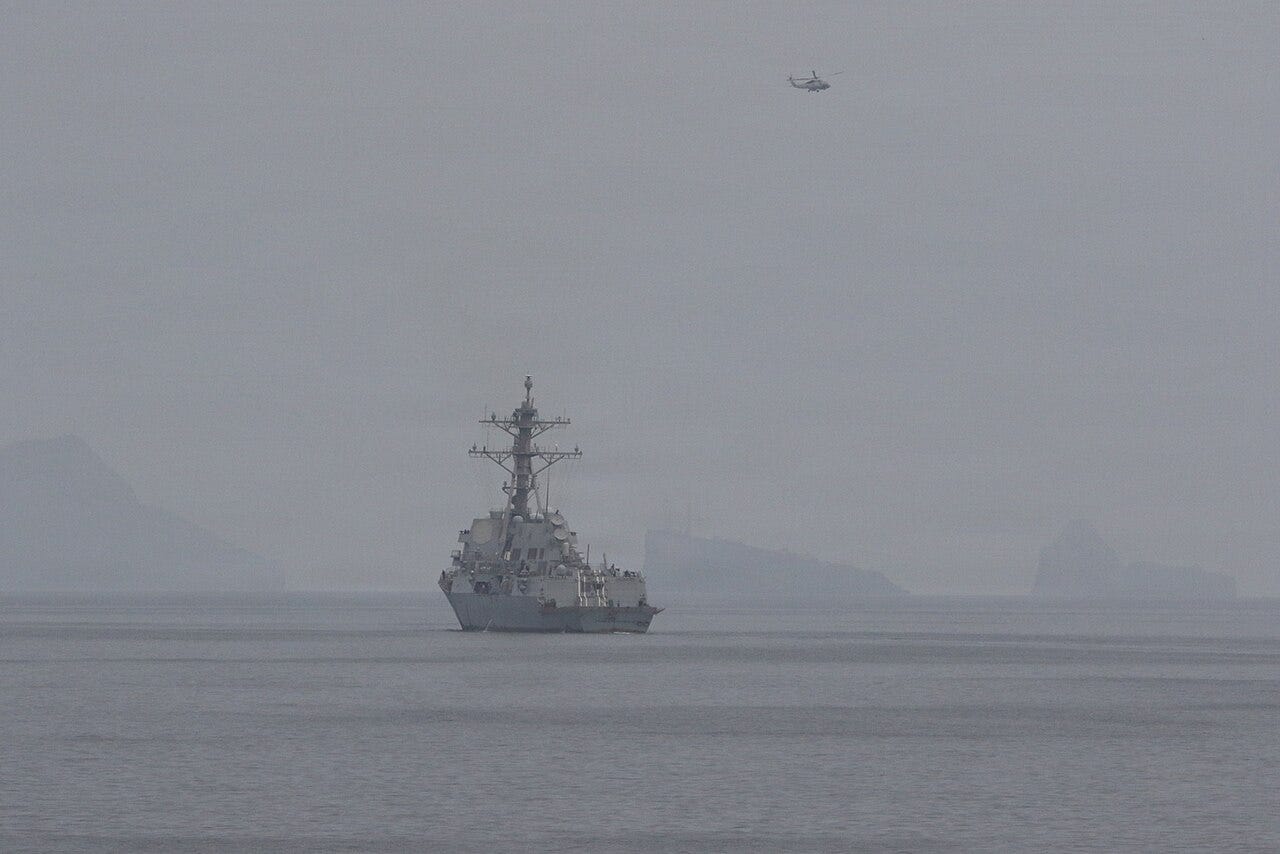
Last week’s efforts by Pakistan to broker a ceasefire between the United States, Iran, and Israel after over a month of armed conflict in the Middle East have seemingly fallen apart, and the escalation which has followed represents a dimension of warfighting far more destabilizing than what has been seen thus far.
After ceasefire talks fell through on April 13th, US President Donald J. Trump announced that the United States itself would launch an armed naval blockade of the Strait of Hormuz, through which over 20% of the world’s seaborne oil and liquefied natural gas (LNG) flow annually. Trump’s escalation is by no means the first in the heavily-disputed waterway: in response to Washington’s initial strikes throughout March, Iran struck over 20 commercial vessels in the strait and mined the waterway, two actions which prompted virtually every global shipping company to suspend its operations in what remains perhaps the most critical artery for maritime commerce in the world.
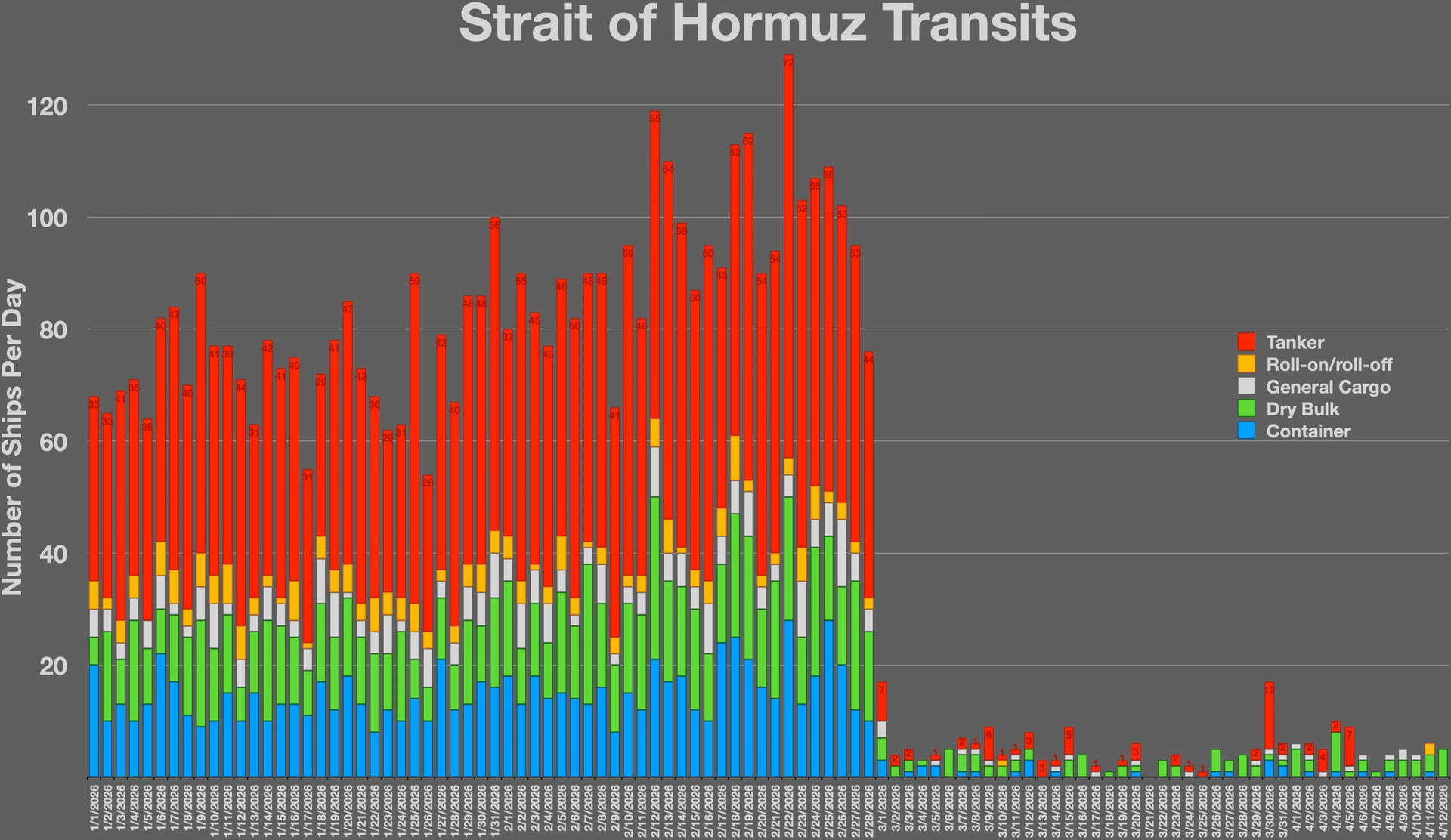
America’s supposed blockade of Hormuz rests upon nominal conditions. US Central Military Command (CENTCOM) has claimed that the blockade seeks to exclusively deter any vessels coming in or out of Iranian ports rather than to indiscriminately bar access to the Persian Gulf. For its part, Iran has allegedly begun charging tolls of over 1 million USD for safe passage through the Strait, with notable exceptions for allies like China and Russia and for countries that have negotiated bilateral agreements like India, Malaysia, and the Philippines. Regardless of the technicalities, what could not be further from the truth is that the Strait of Hormuz remains too dangerous to be of much use, so much so that some countries have adopted an “every man for himself” approach to gaining safe passage. If this isn’t reminiscent of maritime history up until 1800, then I don’t know what is.
And as of April 17, both sides have outdone their previous posturing by issuing broadly-defined statements claiming that the strait is now open to “everyone,” as if the situation were not already confusing enough.
These statements of intent do matter—especially when they translate to meaningful and consistent action —but what perhaps matters more is the very uncertainty and confusion surrounding a security outlook in the Strait of Hormuz that is changing by the hour. What are we to believe: that any ship travelling the strait will be shot at, hit by a mine, or by halted by the American Navy, or that the strait is open and safe to traverse? Both sides have seemingly taken on both policies at the same time.
In the coming days, the situation in the Strait will likely continue to change for better or for worse on a daily basis. This very unpredictability and volatility in policy, even if suggestive of a de-escalatory approach, ultimately fuels the very uncertainty that scares away anyone and everyone from utilizing the waterway. After all, if a ship were to leave Taiwan and reach Bahrain 30 days later, who knows what would be different by then? Risk is the fundamental derivative of uncertainty, and in a world where nobody knows what’s going on and when money and human lives are on the line, few will take the chances.
The Economic Stakes:.
The 20% of global oil supplies generated by activity in Hormuz have virtually ceased, sending oil prices up over 50%. The export of other important commodities from the Middle East like fertilizer, helium, and aluminum has also been seriously curtailed.
The Arab Gulf States, the primary oil exporters whose supply lines lie stuck behind the Strait, tried in vain to prepare for an energy fallout in the days leading up to the Iran-Israeli-American War. Oil was prepositioned for export earlier than usual in Saudi Arabia and other countries, while Oman started to build up exports along its deep-water of Duqm, Salalah, and Sohar that all lie beyond the Hormuz chokepoint. These efforts have yielded some success, but they are nowhere near enough to redraw energy export routes when the primary artery of Hormuz is severed.
The Arab states probably didn’t expect to be hit by Iran in response to Israel and America’s actions, and their naturally constrained geographies can do little to circumvent the conflict zones that surround them. We can now see with striking clarity why the Persian Gulf is called the “Persian” Gulf and not the “Arab” Gulf—Iran holds the geographic and military power to determine who traverses the waterway and the terms on which they do so.
Oman’s few ports beyond the grip of Hormuz hold nothing close to the capacity needed to compensate for oil exports via the Persian Gulf, and as a result many of the Gulf States have been forced to completely halt production of oil and LNG since they have nowhere to ship it and a limited space to store it. Among these countries are Iraq, Qatar, Saudi Arabia, Kuwait, and the UAE, all of whom rely upon safety-dependent industries like oil exports, tourism, and aviation for between 90% and 95% of their national revenues.
While rhetoric from both Iran and the United States seems to be understating the intensity of the situation in the Persian Gulf in an effort to convey a false sense of control over the (deeply uncontrollable) situation, the outlook for all of the Gulf States remains nothing short of existential. Iran needs not march into Riyadh or Abu Dhabi or Doha to achieve victory, but rather to simply strangle their economic lifeline and weather America’s aerial assaults without regime collapse-- that bar is lower than it sounds.
Unlike its Gulf neighbors, Iran has been a regional superpower for over five thousand years— and for good reason. Tehran certainly relies upon oil exports to prop up its economy, but it is also the only major country in the region other than Turkey that can source its own food supplies and basic industrial needs through domestic production and sustainable overland trade routes throughout Eurasia. Its geography straddles the bulk of the Persian Gulf, giving it the ability to control the navigability of the waterway in a way no other country can—not because of firepower, but because it’s easy to attack a ship with a drone when its right off your coast. Iran’s war with Washington has pushed Tehran over the edge in a way that has allowed for Iran to activate the latent but lethal ability to control the Strait of Hormuz through force, and an Iranian state that exercises this timeless advantage in defiance of globalist parameters is stronger for doing so.
As for the Gulf States, the situation is unlikely to resolve itself anytime soon. The question is not one of economic slump or stagnating foreign investment, but popular uprising and civil collapse in otherwise-prosperous countries that will simply lose access to the revenues that have long kept them afloat. The math is simple, indiscriminate, and harrowing.
Global Repercussions:
The fragile petrostates of the Middle East are far from the only ones suffering from the closure of the Strait of Hormuz. While roughly 20% of global hydrocarbons are sourced from the now-strangled Persian Gulf, the proportion of such products that go to the Indo-Pacific Region is disproportionately higher. China, for instance, receives upwards of 50% of its oil imports from the Gulf, with India (~40%), Japan (~90%), and South Korea (~70%) all finding themselves in similar or perhaps even more dramatic positions of vulnerability.
Of course, we’ve already discussed some bilateral agreements between Iran and countries like India and China to “circumvent” Iran’s blockade of the Strait, but this discounts the second blockade of the Strait launched by the Americans (how can two blockades exist at the same time?!), who claim that any ship entering or leaving Iranian ports would be deemed a target. Even if commercial activity in the Strait becomes more practical as Trump has promised, this still means that India and China’s share of Iranian oil imports (15-25%) will remain off the table—and this is the best case scenario if a negotiated settlement proves itself to be impossible.
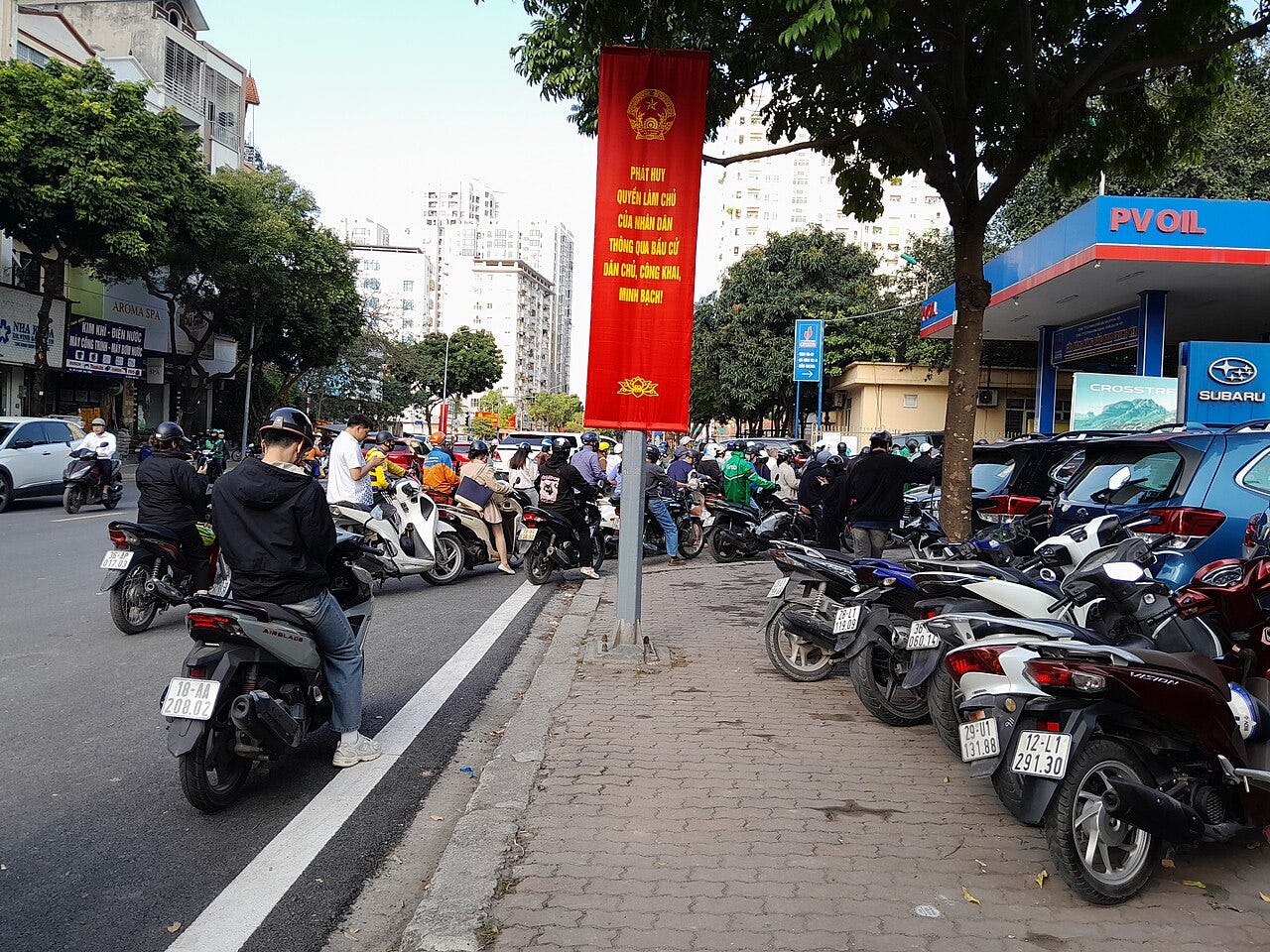
The worst case is, understandably, far worse. China, Japan, and the other nations of the Indo-Pacific have limited alternatives outside of Russia and Central Asia to source their hydrocarbon needs. The crisis in the Strait reaffirms the geographic vulnerability of these nations in a world where perpetually stable trade routes and unconditional free trade are no longer the norm, and it also prompts East Asian policymakers to reassess the safety of their energy supply lines. This will involve the extensive realignment of trade patterns in the short-to-long term, a step that leads us even further down the path of global depolarization and regionalization.
Countries like China have long prepared for a crisis like this in the wake of their geographic shortcomings. Chinese oil prices have risen meteorically in the past month, with Chairman Xi Jinping now taking measures to release vast quantities of strategic oil reserves that should theoretically keep the country afloat for at least four months if the situation in the Middle East remains the same. Japan, who is in a far more compromised situation, has released emergency reserves of 80 million barrels that could last a little over a month according to current figures.
China’s adoption of energy-autarky in light of recent events seems to be working quite well, but Xi will not be able to ignore the issue indefinitely. China’s advances in the EV industry and its growing energy ties with Moscow and Astana have made long-term solutions to the country’s hydrocarbon insecurity more palatable, but in the end, the Strait will have to open fairly soon if China is to avoid a crisis that even its short-term strategic reserves cannot circumvent in perpetuity.
China’s outlook on the war in the Middle East holds serious implications for the scheduled meeting between Chairman Xi and President Trump in Beijing in mid-May, where the United States will most certainly hold a significant degree of leverage over a Chinese economy that desperately needs to work out a deal in the Strait as quickly as possible. China’s need to bring about such an agreement is non-negotiable, and while Washington will most certainly entertain such an initiative, it will attach numerous conditions and concessions to it as well. Within the context of the broader Sino-American economic rivalry over everything from advanced semiconductors to critical minerals to respective spheres of influence, the United States is positioning itself to consolidate its advantages over its principle Chinese rival in a very meaningful way.
Whether these temporary advantages outweigh the military costs of Washington’s war in Iran, however, is a different question altogether. In observing the crisis in the Strait of Hormuz, we are reminded that even a war-torn Iranian regime holds advantages that cannot be outflanked: a favorable geography, the ability to close the Strait of Hormuz on-demand by newly-established precedent, and the economic reality that even a nominally safe Persian Gulf is not safe to global shipping companies at all. The next few months might be a rough ride for everyone counting on those oil tankers…