

Washington's Patience with Putin is Wearing Thin
Trump's "Peace Through Strength" foreign policy doctrine is now turning its full force against a Russian government with little genuine desire for a peace deal in Ukraine

Almost a half-year into the Trump administration, it seems clear that the White House’s newly preferred modus operandi has become one of unpredictability. The implementation of Trump’s “liberation day” tariffs has been left largely ambiguous, as was the leadup to the American strike on Iran’s nuclear facilities in June of this year. This unpredictable set of actions, however, represents a coherent policy of creating order, leverage, and net gain through the initiation of ambiguity. The Hoover Institute Economist Steven J. Davis described such a policy as follows:
My doctrine for interpreting Trump’s trade policy is the doctrine of supplication. That is, the chaotic, back and forth, erratic nature of the policy is useful when you’re trying to draw attention to yourself and cultivate supplicants, because you are the one who is creating the chaos and the erratic nature of policy.
And you are the one who, if properly genuflected to and praised and strike a deal that makes the President look good, well, then you’ll get some relief from all the chaos.
Davis’s assessment, while economic in nature, clearly runs parallel to the foreign policy of the Trump administration, particularly in respect to the ongoing efforts at reaching a peace settlement in the Russo-Ukrainian War.
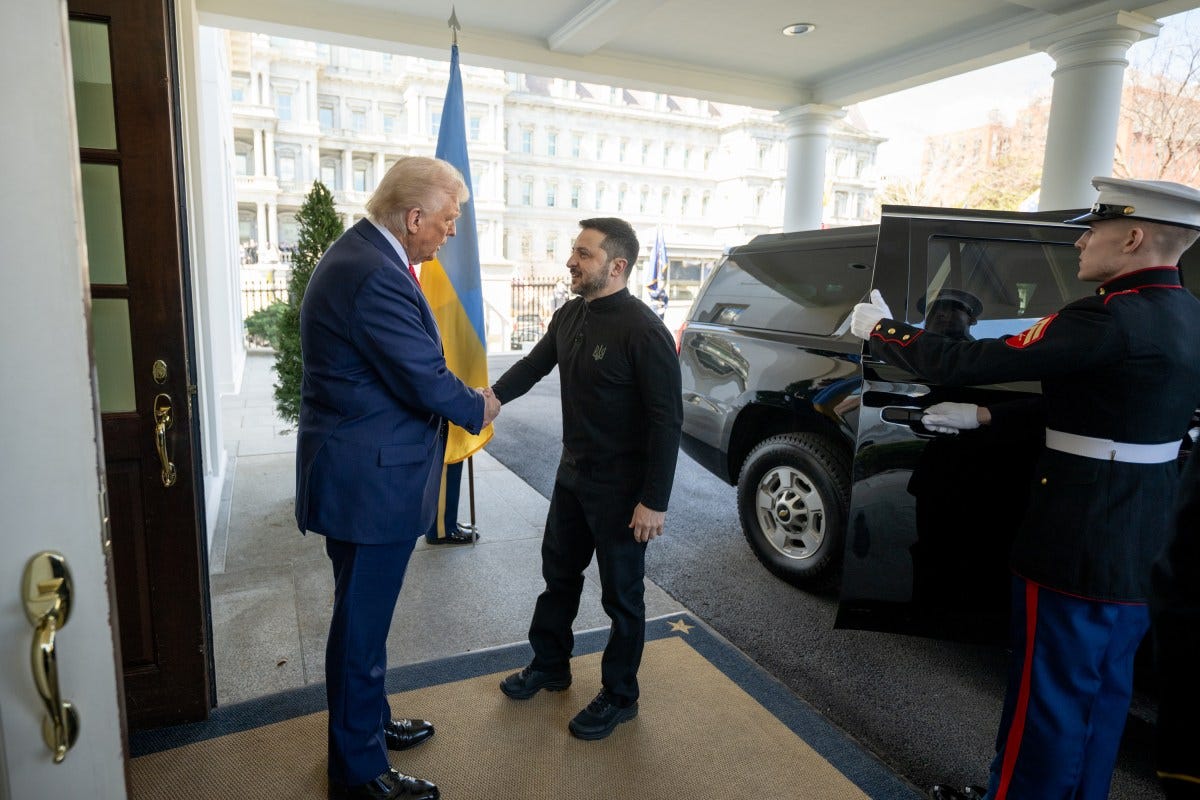
When Trump and Zelensky met at the White House in February, a standoff over continued US military support to Ukraine precipitated a dramatic falling out between the two leaders. Within days, Washington had suspended all military aid to Ukraine, citing a lack of determination by Kyiv to reach a negotiated settlement with Russia. This withdrawal represented the exact creation of “chaos” needed to force Ukraine into making diplomatic concessions to the United States, and quickly after Zelensky’s apology, military aid and intelligence sharing were resumed.
Trump would personally call this novel approach to foreign policy “peace through strength,” but since its initial execution in February, little progress has been made towards efforts at a US-organized truce. In fact, it has quickly become evident that Vladimir Putin, not Zelensky, presents himself to be the greatest obstacle to achieving peace in Ukraine. Despite generous American proposals of Ukrainian absence from NATO and the recognition of Russia’s captured territories in Ukraine, Putin has since refused ceasefire after ceasefire. The Trump administration has since realized that Putin’s self-proclaimed desires for peace are not being complemented by actions, and earlier this month, Trump’s patience seemed to have reached a breaking point:
We get a lot of Bulls—t thrown at us by Putin, if you want to know the truth.
Trump’s subsequent actions have been dramatic. In what many have called a complete pivot in Washington’s Ukrainian policy, new weapons shipments—including patriot missile systems—have been allocated for Ukraine. Trump also announced a 50-day deadline for Russia to come to a negotiated settlement, threatening to place a 100% tariff on the country if such a deadline were not heeded to. Additionally, the White House has threatened to place economic sanctions on any nations which purchases Russian gas in the immediate future if the war continues.
While these measures are certainly of significance, to call them a “turning point” in Trump’s stance on Ukraine would be inaccurate. Just as the White House has used threats of halting weapons shipments to coerce Ukraine into seeking a peace agreement, so too is Trump putting chaos-inducing pressure on the Russians through economic warfare and the bolstering of Ukraine’s defenses. What has changed is the target of American pressure, not the method itself.
Trump’s efforts at peace in Ukraine over the past several months have clearly shown him that Russian actions do not correspond with their empty promises of peace. As Ukraine and Europe demonstrate their general willingness for a peace agreement, Moscow has only escalated its aerial attacks over Ukrainian cities—many of which have killed and wounded numerous civilians. As such, Trump’s “new” approach to Ukraine represents a new phase, but not a pivot, in his efforts at achieving peace. If Russia seeks to continue pursuing its self-evident aims of creating a vassal-state out of Ukraine, it will thus face immense pressure from an American government which now seems only more eager to support the Ukrainians.
Despite Trump’s efforts at pressuring Moscow for peace, it seems increasingly unlikely that Putin will cease his assault on Ukraine. In such a case, American and Western resolve to continue supporting Ukraine will only grow. However, while a continued war presents itself as a significant long-term challenge to Moscow, it is also not in Washington’s interests either. The Americans seem fully committed to stabilizing Eastern Europe in its efforts to commit more military and political efforts towards the Indo Pacific Region, and a Russia still at war with Ukraine is a Russia still closely-knit with China, North Korea, and its other revisionist partners.
In essence, the geopolitical tools at Trump’s disposal have approached the roadblock of Russia’s unwavering geopolitical aims. Unless the Kremlin makes a drastic strategic pivot in the coming weeks, we are likely to see the current trend of polarization between Moscow and the West to only grow.