

Where do things go from Here?
Russia has launched armed drones against Poland--a NATO member state. Article 4 has been triggered by Warsaw, and what happens next may decide the fate of Europe for years to come.

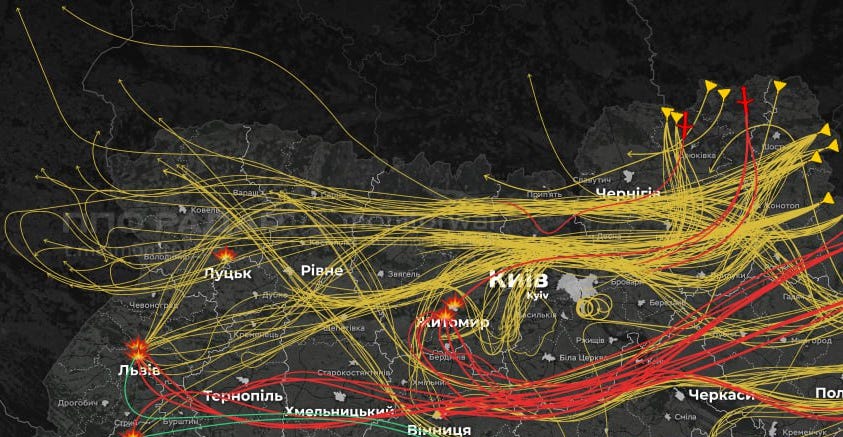
On September 10, 2025, nineteen armed Russian attack drones crossed into Polish airspace. Fighter jets from a host of NATO nations responded to the threat within minutes, preventing any of the projectiles from reaching their intended targets in eastern and northern Poland but precipitating considerable property damage along the Polish-Ukrainian border. In response to this attack, Poland activated NATO’s “article four,” which stipulates that all of the alliance’s member states must consult with Poland to discuss an appropriate response to the mounting crisis which it now faces. While article 4 has been activated before, its application is not to be taken lightly—the last time it was used was out of response to Ukraine’s full-scale invasion in 2022.
This is not the first time Poland or other peripheral NATO nations have found themselves dealing with the spillover of the Ukraine war, but it is the most significant to date. Sure, a few Ukrainian anti-air projectiles have gone off track towards Poland, or a Russian jet has crossed a little to far into NATO airspace, but it would take the most delusional Russian apologist to genuinely believe that this attack was an “accident.” Russian and Ukrainian drones have been able to strike targets as specific as a certain part of a certain building in a certain city from thousands of miles away for the full duration of this war. It seems hard to believe that a couple-hundred mile “detour” of one, let alone twenty, drones could be watered down to a technical error.
This attack by Russia against Poland, while relatively insignificant, effectively constitutes an “act of war,” as many in Europe have since asserted. Yet, as delusional as Putin may have proven himself to be about underestimating the strength of his enemies in the past, even he knows that initiating a war with the strongest military alliance ever constituted in human history would be a grave mistake. So, what is it that Putin is after, and how ought the collective West to respond to this new chapter in its relationship with Russia?
One Bear poking a bigger bear:
The most likely assessment of Putin’s clearly conscious attack on Poland can be attributed to a general Russian desire to test the durability of the NATO alliance. This generally aligns with Russia’s apparent war strategy in Ukraine: to wear down the resolve of the West until Ukraine is left to the mercy of the Kremlin to carve up. What this also shows is that, while already self-evident for several months, Russia doesn’t seem to have any interest in pursuing any sort of negotiated compromise in Ukraine.
While the Western response to Russia’s recent steps has not yet been fully articulated or enacted, it’s hard to see Russia gaining anything from its actions. While the European Union is notorious for failing to be properly assertive of its own interests, it’s hard to see how picking a fight with the Poles could wear down the West’s resolve to defy Russian antagonism. From Britain to Estonia, all of Europe—especially in the nations east of Germany—see Russia as their primary existential adversary. Historically, the Poles and their neighbors are not known for complying with the will of the Russians, much less in an era where Warsaw’s military capacity and political prowess is quickly catching up to that of Russia itself.
Even European leaders with Russian sympathies like Viktor Orban of Hungary have strongly criticized Russia’s attack. All of this sounds like quite the opposite of a deterioration in European solidarity. And, while many voices have justifiably raised concerns over Europe’s relative unpreparedness for war with Russia, it would be impudent to expect any country on a peacetime footing to be on the verge of full mobilization. If it has taken Russia three years to capture 20% of Ukraine, I wouldn’t be concerned with the Russians marching into Warsaw or Bucharest anytime soon.
We can be sure that Europe wants to respond to this attack with sweeping measures against Russia in support of Ukraine, but the cusp of all of this lies in the political will of Washington. Trump’s administration has certainly rocked the boat of trans-Atlantic ties over the past several months, but Washington’s litmus test on Russia’s sincerity on achieving peace has played its course, and we’re now in a transitory period where America is once again defaulting on its previous policy towards Russia.
Picking a Side:
The personality of Trump himself is of critical importance to understanding all of this. The President, clearly out for the title of a “global peacemaker,” feels personally betrayed by Vladimir Putin for his failure to reciprocate American leniency. After Putin’s lavish visit to Beijing last week, this sentiment has only been strengthened. Trump thus finds himself in an uncomfortable middle ground. If he completely denounces efforts at peace with Russia, he will suffer a political and reputational embarrassment on account of his famous promise to resolve the conflict in 24 hours. Yet, if America does not take a decisive stance on Russia’s clearly-stated intentions in Ukraine, it risks surrendering a vast degree of leverage to the Kremlin when it needs it most. While Ukraine’s lot in all of this is undeniably the least favorable, we cannot discount the growing economic and social turmoil facing Russia itself.
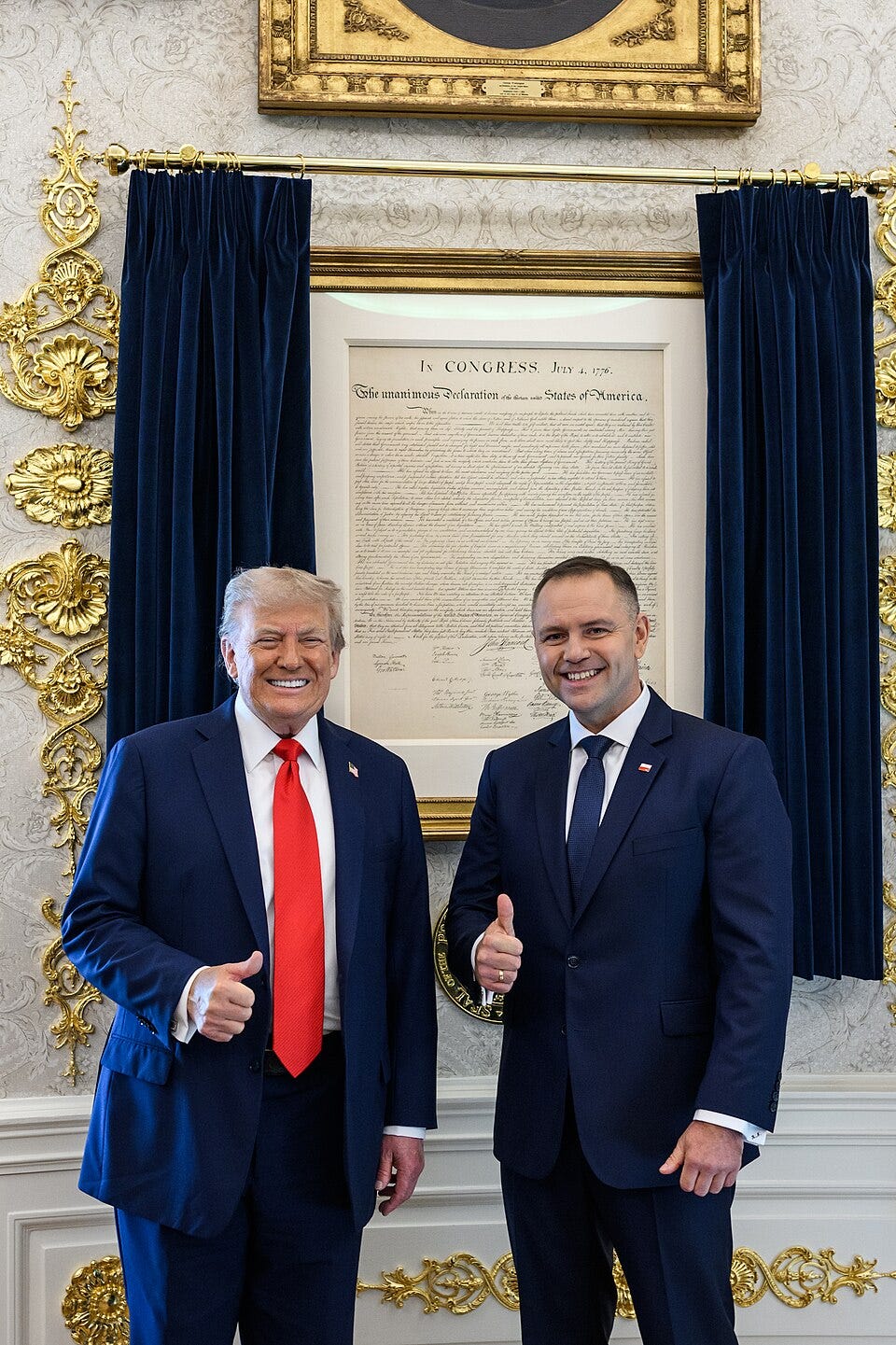
Trump’s indecision on the matter has meant a floundering in American policy for the past few months, and while Trump has a long way to go before he’s “gung-ho” with Kyiv, we’re closer to that point than many think. Trump recently met with Polish President Karol Nawrocki in the White House and claimed that he would personally deploy more troops to defend Poland simply if the country wanted more. And, on September 13, the President made the following comment regarding Russia on social media:
A LETTER SENT BY PRESIDENT DONALD J. TRUMP TO ALL NATO NATIONS AND, THE WORLD: “I am ready to do major Sanctions on Russia when all NATO Nations have agreed, and started, to do the same thing, and when all NATO Nations STOP BUYING OIL FROM RUSSIA. As you know, NATO’S commitment to WIN has been far less than 100%, and the purchase of Russian Oil, by some, has been shocking! It greatly weakens your negotiating position, and bargaining power, over Russia. Anyway, I am ready to “go” when you are. Just say when? I believe that this, plus NATO, as a group, placing 50% to 100% TARIFFS ON CHINA, to be fully withdrawn after the WAR with Russia and Ukraine is ended, will also be of great help in ENDING this deadly, but RIDICULOUS, WAR. China has a strong control, and even grip, over Russia, and these powerful Tariffs will break that grip. This is not TRUMP’S WAR (it would never have started if I was President!), it is Biden’s and Zelenskyy’s WAR. I am only here to help stop it, and save thousands of Russian and Ukrainian lives (7,118 lives lost last week, alone. CRAZY!). If NATO does as I say, the WAR will end quickly, and all of those lives will be saved! If not, you are just wasting my time, and the time, energy, and money of the United States. Thank you for your attention to this matter! DONALD J. TRUMP, PRESIDENT OF THE UNITED STATES OF AMERICA”
Trump still feels uncomfortable with the idea of ditching efforts at peace with Russia, as was made evident by a similarly-timed comment that Russia’s drone strike on Poland “could have been a mistake.” We can be sure that even he doesn’t believe this, yet the liminal ground which he currently occupies over whether to support Ukraine unconditionally or to make amends with Russia is most definitely leading him to take a rather vague stance on the matter.
Yet, Trump’s most recent comment suggests a reluctant yet genuine effort by himself to finally recognize that working with Russia through conventional diplomatic means is not going to make any headway.
With Trump demanding reciprocity from European leaders if Washington is to act against Russia, and with the Europeans as eager as ever to take up Washington’s demands of such reciprocity, it is rather likely that the unilateral stance taken by NATO against Russia between 2022 and 2024 is making a comeback.
As the West tries to figure out how it’s going to move forward, Russia will be forced to figure out how it will survive. While Trump’s efforts to economically isolate Russia from China will prove far more difficult in practice than in theory, the full energy-independence of Europe from Russia, combined with the further isolation of Russia on the global stage, will only worsen its growing economic woes.
Russia’s economy has been able to teeter along fairly well for the past few years, but this is only prototypical of war economies living on borrowed time and resources. Even if Ukraine is fully conquered (which is most certainly not going to happen), what will happen to the millions of young, emotionally troubled, and unemployed Russians returning home from the battlefield? What will result from over a million casualties in a nation already facing one of the worst demographic crises in the world? And, most importantly, how could the Russian economy recover without the European financial support that saved it from complete collapse in the 1990’s? China may present itself to be an alternative, but Beijing will probably be more concerned with saving itself from economic irrelevance over the course of the next decade. Putin knows that this crisis is only just over the horizon, and its hard to see how his nation could endure it without experiencing drastic changes.