

"Word" War III
The rhetoric of former Russian President Dmitri Medvedev has precipitated a new volley of tensions between Washington and Moscow. Here's what's at stake.

The Trump administration has thus far relied upon two means of leverage in its efforts to bring about a diplomatic solution to the Russo-Ukrainian War: military aid to Ukraine and, conversely, sanctions on Russia.
In the early months of the Trump administration, the White House often used threats of upending military assistance packages to Ukraine as a means of coercing Kyiv into more aggressively pursuing an armistice. As Russia, rather than Ukraine, has shown itself to be the true obstacle in seeking peace, however, Trump has significantly reinforced Ukraine’s military capabilities through multi-billion dollar armaments packages.
On the other hand, sanctions have done little to weaken Moscow. Russia, while undergoing a period of serious decline, is still a “Great Power” with the ability to assert its will without decisive interference, making much of America and Europe’s efforts at waging economic warfare largely ineffective.
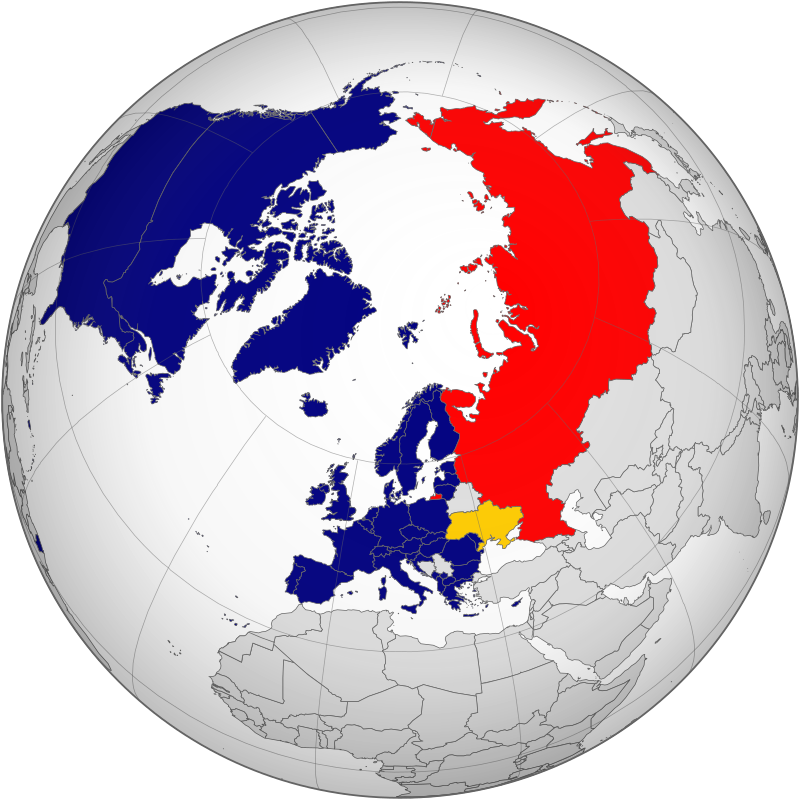
Trump has been quick to realize this flaw in the current U.S. approach, and as Russia continues its war against Ukraine at full force, he has begun to propose alternative means of weakening—and coercing—the Russian Federation.
Indirect Sanctions:
Russia may have lost access to Western markets indefinitely, but its ties with other major economies—particularly in India, China, and Brazil, have remained relatively strong. India and China continue to buy Russian oil en masse, creating an effective loophole for efforts at strangling the export of Russia’s most valuable commodity. Donald Trump, despite his amicable ties with the world’s largest democracy, had the following to say in regards to Russo-Indian economic cooperation:
I don’t care what India does with Russia. They can take their dead economies down together, for all I care. We have done very little business with India, their Tariffs are too high, among the highest in the World. Likewise, Russia and the USA do almost no business together. Let’s keep it that way, and tell Medvedev, the failed former President of Russia, who thinks he’s still President, to watch his words. He’s entering very dangerous territory!
Trump proceeded to claim that an additional 25% “penalty” tariff would be placed on New Delhi if it continued to purchase Russian oil. This move certainly risks souring the Indo-American relationship, yet it seems that Trump holds more leverage at the moment. India is being forced to pick a side in a conflict it would have otherwise preferred to remain detached from, while Russia’s ties with much of the non-aligned world are being tested by the gauntlet that is American economic pressure. India will likely seek a compromise with Trump, as almost every other nation in the world has done thus far, but the fact of the matter is that Russia’s economic situation can only get worse—and not better—by Trump’s recent wave of economic warfare.
Medvedev’s rhetoric:
Trump’s post on Truth Social also contained a brief allusion to the hostile remarks of Dmitri Medvedev, the Deputy Chairman of Russia’s Security Council. Medvedev, the president of Russia between 2008 and 2012, was regarded by his countrymen as an indecisive appeaser of Western interests and by America as a puppet of Vladimir Putin, which he effectively was. Medvedev has never been one to take decisive and self-assertive action in the world of foreign affairs like Putin has, so much of his rhetoric simply reflects what one may expect from any typical “yes man” of Vladimir Putin.
Medvedev, who has continued to take a rash anti-Western stance even as Putin has become more reserved, claimed on July 28th that “each new ultimatum” made by Trump against Russia “is a threat and a step towards war…Not between Russia and Ukraine, but with his own country.” Trump, in turn, responded to Medvedev’s bluffs with a threat of his own:
Based on the highly provocative statements of the Former President of Russia, Dmitry Medvedev, who is now the Deputy Chairman of the Security Council of the Russian Federation, I have ordered two Nuclear Submarines to be positioned in the appropriate regions, just in case these foolish and inflammatory statements are more than just that. Words are very important, and can often lead to unintended consequences, I hope this will not be one of those instances. Thank you for your attention to this matter!
Trump’s most definite motive for moving American nuclear assets closer to Russia is to warn Medvedev, and Putin, that aggressive and hostile rhetoric will not be tolerated. He is showing that if Russia is to negotiate in good favor with America, it will be done on America’s terms. Ultimately, the White House is forcing Putin to discipline his inner circle, further weakening Russia’s perceived image of strength and increasingly giving Ukraine and the United States a greater degree of leverage against Moscow.
None of this, of course, refutes the fact that Ukraine’s situation on the battlefield is slowly and steadily deteriorating. Russia has made serious gains in the Sumy, Donetsk, and Kharkov Oblasts in recent weeks, and prospects of a renewed Ukrainian counter-offensive are now effectively off the table.
Yet, for all its successes on the battlefield (ignoring the fact that it’s taken Russia forces three years to conquer a fifth of Ukraine), Moscow’s global standing is continuing to rapidly deteriorate. The Russian Federation is still a “Great Power” that can evade certain isolating measures enacted by the West. However, its ability to do so relies on its growing dependency on China, India, and other large emerging markets. If these relationships begin to falter, which seems increasingly possible, the deferred crisis that will be Russia’s postwar recovery will be the least of Vladimir Putin’s concerns.