

Armenia at the Brink
Armenia's 2026 Parliamentary Elections will prove to be a defining moment in the long struggle for self-determination among Russia's periphery

The small Post-Soviet state of Armenia sits on the relatively undefined borders separating Europe from the heartlands of Asia. Like in its ambiguous geography, Armenia now occupies a space of liminal uncertainty in its geopolitical outlook. After years of Russian alignment, the country is now trying to decisively make a break for Europe, and on June 7th of 2026, the country will decide just how far to go in this generational pivot through its long-awaited parliamentary elections.
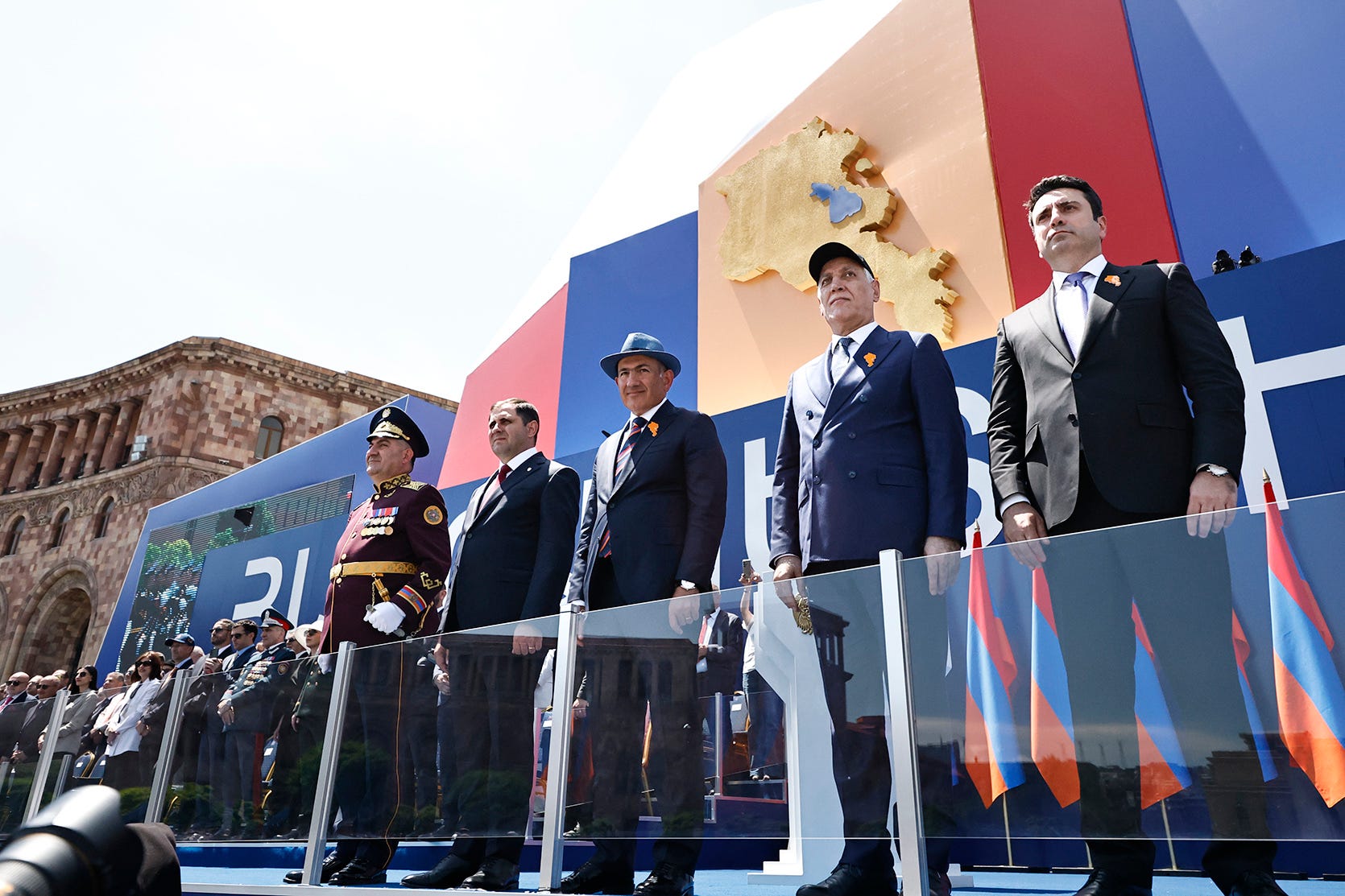
The Context:
The incumbency for this electoral cycle is the pro-Western Civil Contract party of Nikol Pashinyan, which took power under a then-revolutionary Pashinyan after Armenia’s 2018 Velvet Revolution. Under Civil Contract, Armenia has drifted away from the semi-authoritarian system that long defined the country’s domestic landscape. As if domestic turmoil weren’t enough, Pashinyan has also had to face an unpleasant catharsis of numerous long-simmering foreign policy disputes with adversaries to Armenia’s north, east, and west.
For both historically-rooted and contemporary reasons, Armenia and its Turkic neighbors have long been on deeply unfavorable terms. Throughout the early 2000s, this created a paradigm within the South Caucasus wherein Turkey supported its linguistically and culturally-resonant Azerbaijani partner in its disputes against its Armenian neighbors, while Armenia long looked for support from the much larger and similarly Orthodox Christian Russian Federation.
Starting in 2020 and culminating in a decisive offensive in 2023, Azerbaijan fully occupied the disputed, self-ruling ethnic Armenian exclave of Nagorno Karabakh—or The Republic of Artsakh to an Armenian—that lay within nominal Azeri territory. This disputed frontier territory had been a source of Armenian-Azeri enmity since the Soviet collapse in 1991, making Azerbaijan’s total victory over Armenia in 2023 a major blow to an Armenian government that had long seen total concession to Azerbaijan as unthinkable.
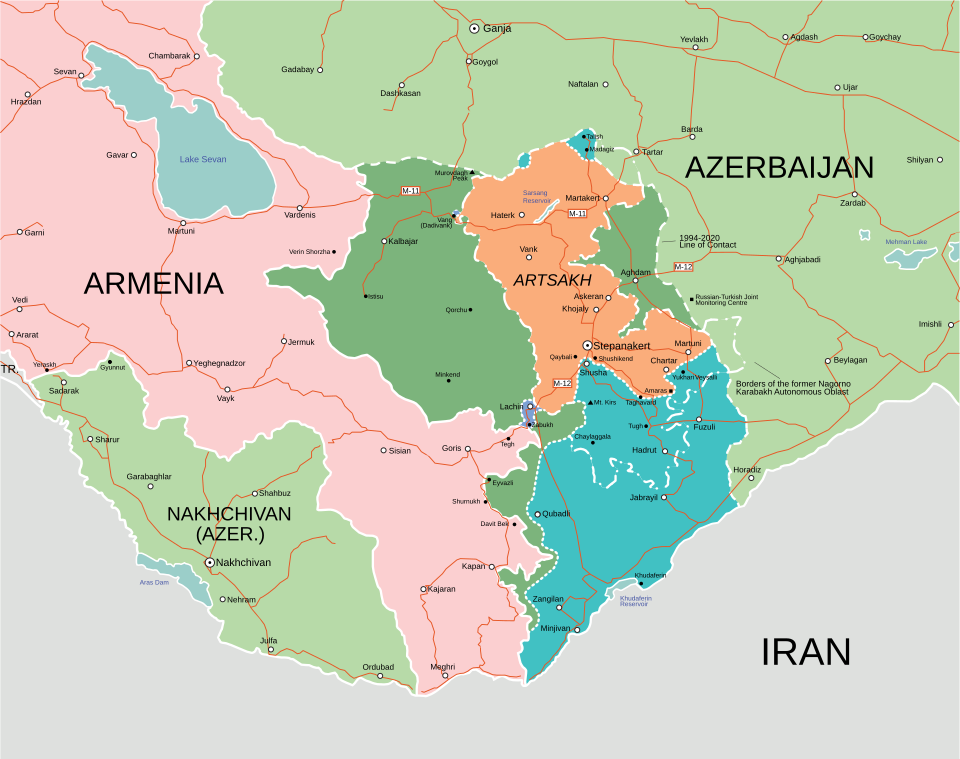
This foreign defeat precipitated the arrival of roughly 100,000 Armenian refugees into the contiguous Armenian state following 2023, a humanitarian crisis that greatly strained the country’s ideological and political bearings. It also greatly called Armenia’s relationship with Russia into question, since Moscow had positioned itself as a guarantor of Armenian security before 2023 but had failed to live up to this expectation following the Azeri offensive into Artsakh. Where in 2022 the vast majority of Armenians saw Russia as an ally, today nearly 70% of Armenians view the country negatively. With Russia’s military and political focus completely tied up in Ukraine, its failure to act on behalf of a vulnerable ally was seen as nothing short of betrayal by the Armenian government and people alike.
The Electoral Divergence:
With Russia no longer seen as a reliable security guarantor, Pashinyan has embarked upon an unprecedented geopolitical pivot away from Yerevan’s longtime Russian ally and towards the West. However, given Armenia’s landlocked geography, Pashinyan believed the only means by which such ends could be reached was through the unthinkable: Armenia would reconcile with the very two countries that had long been Yerevan’s greatest rivals: Turkey and Azerbaijan.
After the total Armenian defeat in Artsakh, Pashinyan has argued that a “reset” of ties with Armenia’s Turkic neighbors would be the only way through which his country could wean itself from a Russian patron who has long propped up the country’s economy and military, since without overland access to both the Caspian and the Black Seas, the country would be isolated from everyone except Russia by geographic constraint.
By this logic, reconciling with Turkey would finally give landlocked Armenia overland access to the European Union, an organization Armenia has deeply heightened its ties with since 2023. As for Azerbaijan, opening the entirely-closed border between the two countries would allow for Armenia to access the resource-rich Caspian Basin of Central Asia, a development which could help the country eliminate its energy insecurity and to become yet another beneficiary of the rapidly-developing “Middle Corridor” connecting trade routes from Europe to East Asia through the South Caucasus and Central Asia.
Civil Contract has made this very reconciliation the foundation of its electoral platform. In its own words, the taboo nature of reconciling with two former enemies is based not in political suicide nor forgiveness for apparent past injustices, but rather in a pragmatic belief that the country’s former security guarantee from Russia became void after 2023, thus making realignment—however unorthodox or outrageous it may be—necessary to state survival. To Pashinyan, this paradigm also elicits the assertion that maintaining the integrity of the Armenia-Azerbaijan peace framework would only prove possible if the Civil Contract’s pragmatic foreign policy agenda were to remain in effect.
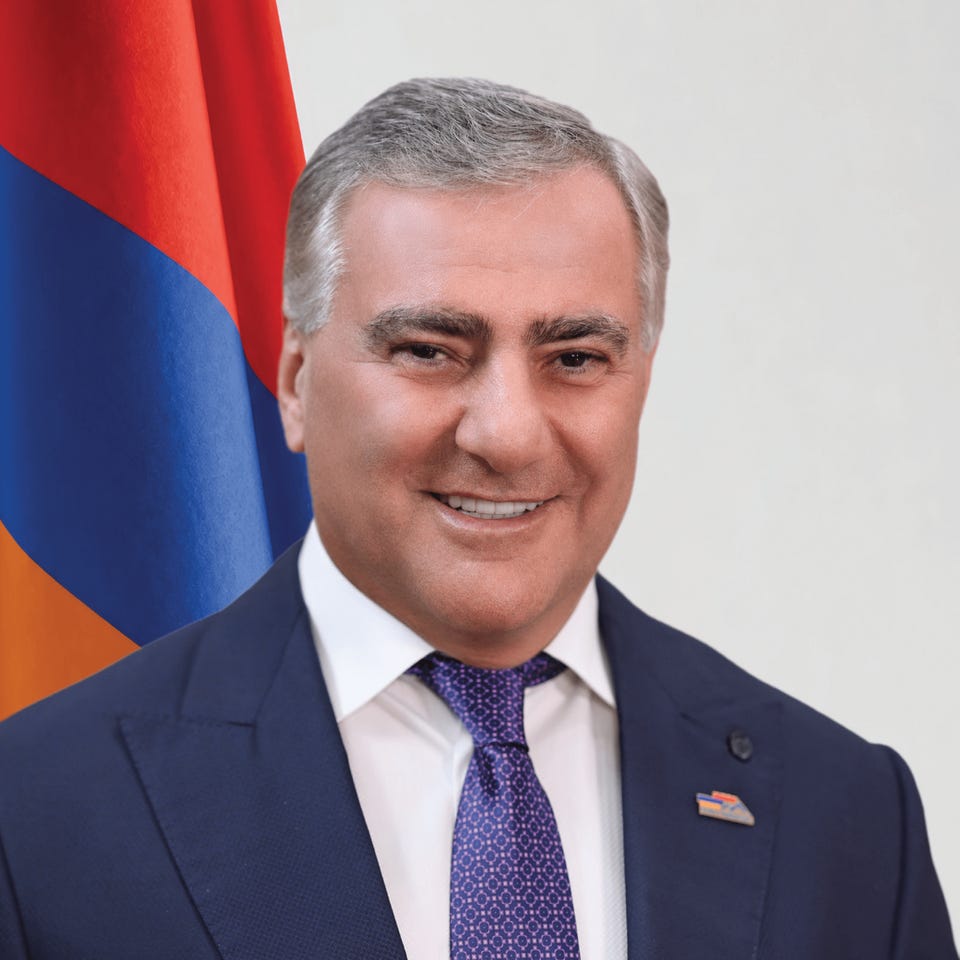
Currently, Civil Contract maintains a significant plurality within national polling, yet it is not without rivals. Pashinyan’s most outspoken electoral rival is the Strong Armenia Party of billionaire and Russian-Armenian dual citizen Samvel Karapetyan, who currently remains under house-arrest for his perceived efforts to overthrow the Armenian government in 2025. Unlike the Civil Contract, Karapetyan’s outwardly pro-Russian political party believes that Armenia can by no means put its trust in a security landscape marked by a lack of Russian patronage, much less alignment with Azerbaijan—the very country that seized Artsakh in 2023. Strong Armenia is far more ideologically-oriented than its adversaries, adhering to the nationalist-derived belief that abandoning Artsakh to Azerbaijan without a fight would be both dishonorable and unacceptable. In effect, these attributes of Strong Armenia make its potential accession to power synonymous with the end of Armenia’s Westward pivot and of its fragile peace treaty with Turkey and Azerbaijan.
Of course, Armenia is not the first Post-Soviet state to have sought a decoupling from Moscow in recent years. Just as we’ve seen in the past with elections in Ukraine, Georgia, Moldova, and other countries, the Kremlin has been markedly assertive in affecting the results of the upcoming election. All the while, however, Armenia’s Western partners have as well…
The Great Power Angle:
As we keep coming back to time and time again, the T.R.I.P.P. Framework laid out by the United States promises to develop overland trade routes that will connect Armenia to Azerbaijan for the first time in Post-Soviet history—all while denying Russia any involvement or oversight in the agreement. This landmark initiative between two former rivals has been the most substantive example of Armenia’s ongoing pivot Westward away from Moscow since 2023. While it may be a victory for Pashinyan under his agenda of connecting Armenia to Europe via two former belligerents, it has also been a self-proclaimed victory for an American President who has projected more attention towards the South Caucasus than many of his predecessors ever have: Donald Trump.
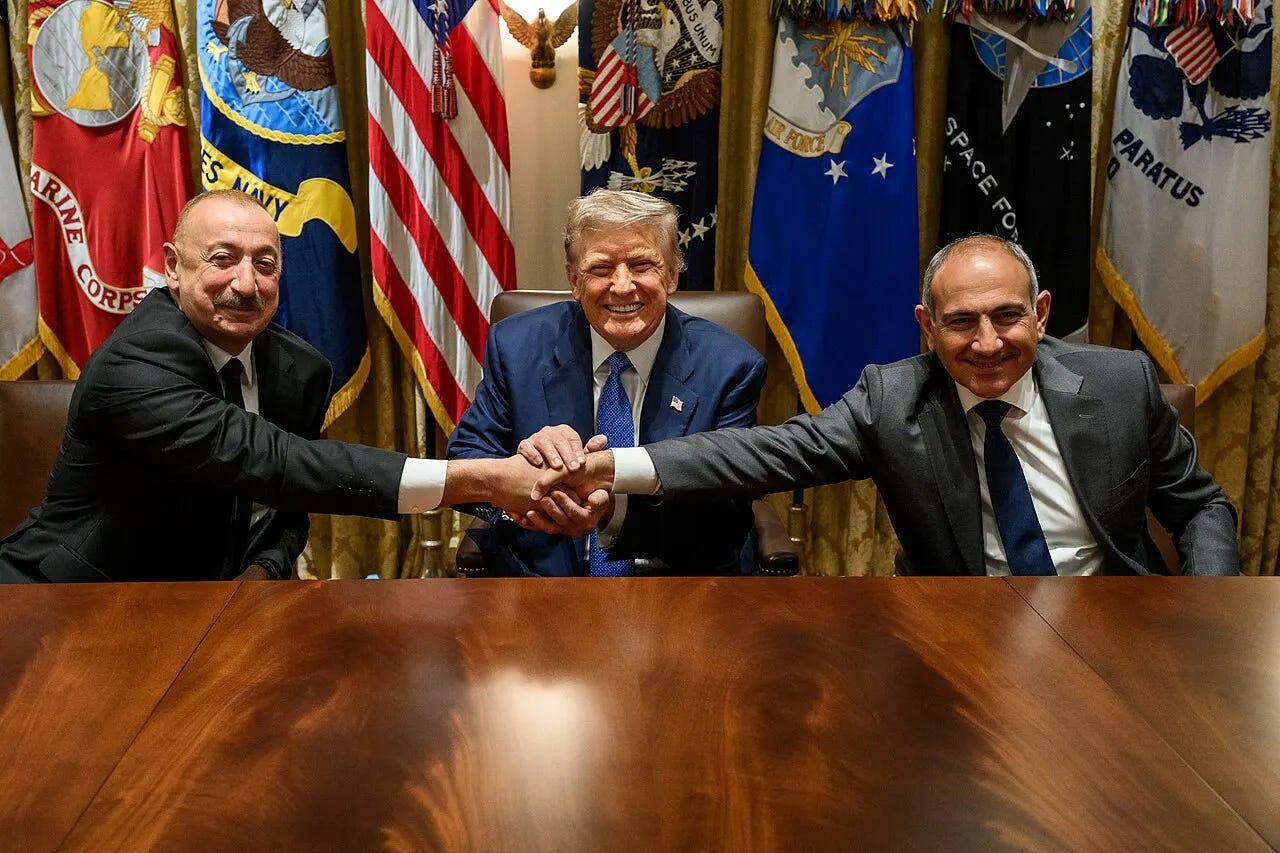
Armenia’s pivot away from Russia has generally been met with great enthusiasm by American and European leaders alike. Donald Trump, who has styled himself as an arbiter of peace on the global stage, has invested a great personal stake in the integrity of the Armenia-Azerbaijan peace framework. In more tangible terms, the US President also sees the creation of a new, stable economic framework within the South Caucasus outside of Russian jurisdiction as crucial to diversifying American supply chains towards Central Asia as conventional markets in Russia and the Middle East have come into question. Given Pashinyan’s role as the proponent of this American-initiated realignment, Trump openly endorsed Civil Contract through a post on Truth Social on May 28, 2026:
Prime Minister Nikol Pashinyan, of Armenia, a great friend and Leader, is making his Country strong, wealthy, and very secure! Nikol completely shares my vision of PEACE and PROSPERITY for Armenia and the entire South Caucasus region. Our Secretary of State, Marco Rubio, just traveled to Armenia, where he advanced several important Deals for both our Countries. Soon, the United States and Armenia will break ground together on the Trump Route for International Peace and Prosperity, which will transform the South Caucasus, and help our wonderful American Energy Companies gain access from Central Asia all the way to the United States. For these reasons, Nikol has my COMPLETE and TOTAL Endorsement for Re-Election on June 7, 2026. With Nikol's help, we will bring the United States, Armenia, the South Caucasus, and Central Asia to greater heights than ever before. Make (Armenia) Great Again — MAGA! President DONALD J. TRUMP.
Other high-level American statesmen have also shown great interest in Armenia’s Westward pivot in recent months, including a visit by Vice President J.D. Vance in February and Marco Rubio in late May. Both high-level engagements between Armenian and American leadership centered around not only the T.R.I.P.P. Initiative, but also efforts by Washington to replace Moscow as a primary financier of numerous commercial and industrial investments within Armenia—including a new nuclear power plant.
The Europeans, too, have voiced great support for Armenia’s Western aspirations, even if the scope of such support is questionable. On May 4, 2026, numerous European leaders including Ukrainian President Volodymyr Zelensky gathered in Armenia’s capital for the first ever EU-Armenia Summit. While a significant step towards realignment in its own regard, the summit also manifested some not-so-subtle indications that Armenia would seriously consider EU Member Candidacy. Given Yerevan’s geographic detachment from Europe and Turkey’s non-membership in the alliance, this development is far-off if not impractical, but it mirrors the same trajectory shared by other former Soviet states like Ukraine, Moldova, and Georgia in the past when in a state of strategic realignment away from Moscow.
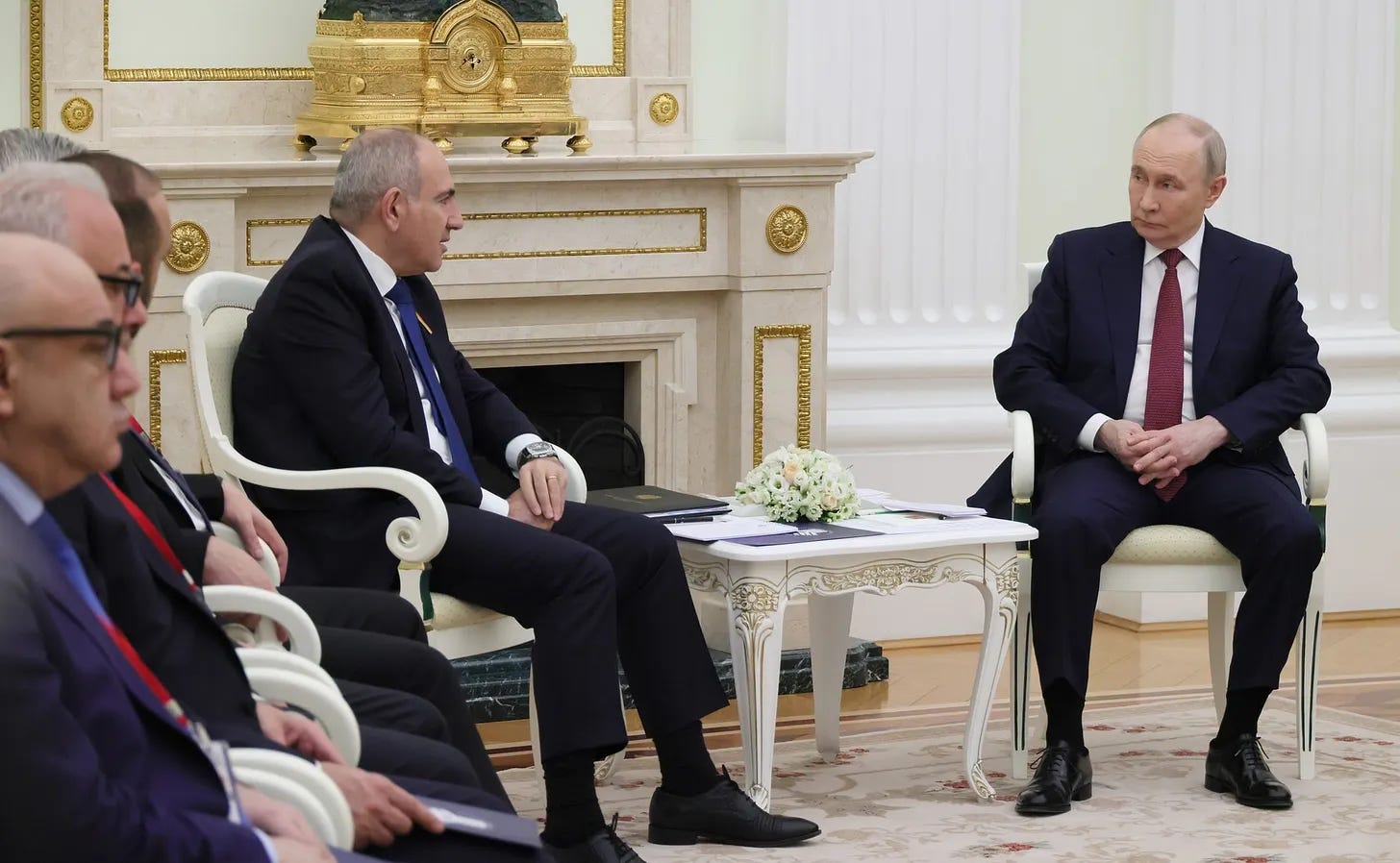
Where American and European support for Civil Contract has been markedly pronounced, the Kremlin’s reaction to what appears to be yet another lost vassal state has verged on the antagonistic. In early April of 2026, Pashinyan and Putin met in Moscow under conditions markedly more precarious than in years past. While Putin voiced no clear objections to Armenian self-determination in Moscow, Russia’s actions towards Armenia in the wake of its Western integration have involved unprecedented economic and political coercion. Russia has taken advantage of Armenia’s dependence on the Russian economy by banning the sale of numerous Armenian exports to Russia and by threatening to upend the subsidized oil prices provided to Armenia through its continued membership in the Eurasian Economic Union, Moscow’s rendition of the EU. The Kremlin has also devised plans to send thousands of Armenian expats back to their home country in a bid to alter the results of the upcoming election in favor of Karapetyan’s pro-Russian opposition party.
Between a Rock and a Hard Place:
The stakes for the upcoming Armenian electoral cycle are as harrowing as they are substantive. If Pashinyan wins on June 7th, the T.R.I.P.P. Peace Framework will likely persist, yet Armenia will face a markedly more unpredictable security landscape as its ties with Russia suffer a serious blow. If Strong Armenia wins, the Armenian-Russian relationship will effectively be restored to its pre-2023 dynamic, but Armenia may once more find itself putting its trust in a security partner whose true concern for Armenian sovereignty is questionable as ties with Azerbaijan break down once more to dangerous levels. And even if Russia’s concern for a Kremlin-aligned Armenia was to manifest itself, its ability to project any power beyond Ukraine has been curtailed after four years of insurmountable losses in the Donbas to the point that it may simply not have the resources to help.
The paradox of the Civil Contract position on Armenia’s future is that it is not absolute yet may have little choice but to do just that. Pashinyan recognizes Armenia’s sustained dependence on Russia for economic cooperation, especially in the realm of hydrocarbons. Yet, Putin has also asserted that any closer alignment between Armenia and the EU would warrant an Armenian departure from the Eurasian Economic Union, the organization which sustains this economic framework. To Russia, multi-vectored policy is simply not seen as an option for Armenia.
And so, an Armenia under a victorious Pashinyan would have to embark upon a regional outlook defined by acute transitional stresses. Armenia would have to put its trust in the continued stability of the Azeri peace framework while giving up its only security guarantee, even if such a guarantee was inherently flawed. The country’s economy will also be more exposed than ever before, requiring a vast pivot away from the Russia goods it has long relied upon and towards a framework that requires the reliability of two former adversaries. Russia may also retaliate through heightened economic and political measures immediately following a Civil Contract victory, with the most sensationalist (and unsubstantiated) concerns suspecting direct military intervention from the Kremlin.
Within Armenia itself, these concerns have most seriously manifested through a growing suspicion of Azerbaijan—the longtime adversary of Armenia that many see as untrustworthy despite ongoing peace efforts. To some, a victorious Pashinyan facing mounting Russian pressure may give Azerbaijan an opening to consolidate its gains along Armenia’s borders even further, especially in the Zangezur Corridor that separates mainland Azerbaijan from the enclave of Nakhichevan. To others, however, the risk of a reignited conflict with Azerbaijan in the event of a Strong Armenia victory is even more palatable—and dangerous.
Whatever follows the electoral results of June 7th, we can expect either a precipitous breakdown in Armenian ties with Russia or a collapse of the Armenia-Azerbaijan peace framework, or something of a similar degree. We have no way of knowing how Baku or Moscow may act, but both countries will remain at the focal point of Armenia’s regional outlook as its domestic political trajectory is brought to the ballot.
The true calamity of the Post-Soviet Sphere has always been those triumphant yet tragic efforts of its newly independent states to detach from Moscow’s sphere of influence. Georgia tried and has failed for the time being, while Ukraine has paid for its self-determination through the most brutal European War in decades. Armenia, like its counterparts, may have to come to grips with Moscow’s intention to keep history from moving forward without persistent hegemony. And yet, it may also be presented with a remarkably hopeful situation that its neighbors have not had the privilege of sharing.
Russia’s true ability to shape the behavior of its periphery has experienced a serious defeat on the battlefields of Eastern Ukraine. We’ve already seen this play out to the advantage of countries like Moldova that have in fact successfully drifted Westwards in spite of deep electoral intrusion from Russia. Despite Russia’s dangerous presence in the Moldovan breakaway region of Transnistria, Chisinau seems to have left the ordeal in one piece.
Armenia’s experience in and of itself is another miracle of sorts: even after the crippling loss of Artsakh under the rule of Civil Contract, the Armenian populace seems to have come to the conclusion that the dangers of unreliable and one-sided Russian vassalage outweigh a potentially fragile period of realignment with two once-irreconcilable enemies.
We know not what Armenia’s election results will bring, nor what will lie ahead in yet another precarious chapter of Armenia’s lived geopolitical experience. Yet, if the country is to follow through on its pivot away from Russia in spite of the associated risks, its success will represent the greatest triumph of Russia’s long-embattled neighbors since their collective independence was gained in 1991. Central Asia and the South Caucasus will be able to truly consolidate into a contiguous center of geopolitical weight, paving the way for a future Eurasian experience defined not by foreign domination or static conflict, but by self-determination and economic prosperity. While this ideal is by no means guaranteed, its foundations have been lain not just by Russia’s decline, but also by a War in Ukraine that is actively setting a precedent for Post-Soviet sovereignty extending well beyond Ukraine.
The picture is not of Samvel Karaperyan, but his brother. Former PM Karen Karapetyan.