

Can Belarus Deter the Inevitable?
Exploring the uncertain political future of Lukashenko's Belarus, after Ukraine...

Like Ukraine, Belarus is a country whose geographic centrality between the Russian heartland and the lowlands of Central Europe has made the nation a constant target for Russian interest and intervention over the past several centuries. To a Russian government eager at asserting power throughout its “Near Abroad,” Belarus has long represented both a strong buffer through which to deter invading foreign armies and a vital forward operating base through which to project Russian influence even further into Europe.
To the modern Russian state, direct or indirect control of Belarus has long been deemed essential in respect to the Near Abroad Worldview, which sees the consolidation of Russia’s periphery through often-coercive means as vital to the cultivation of state security and regional hegemony.
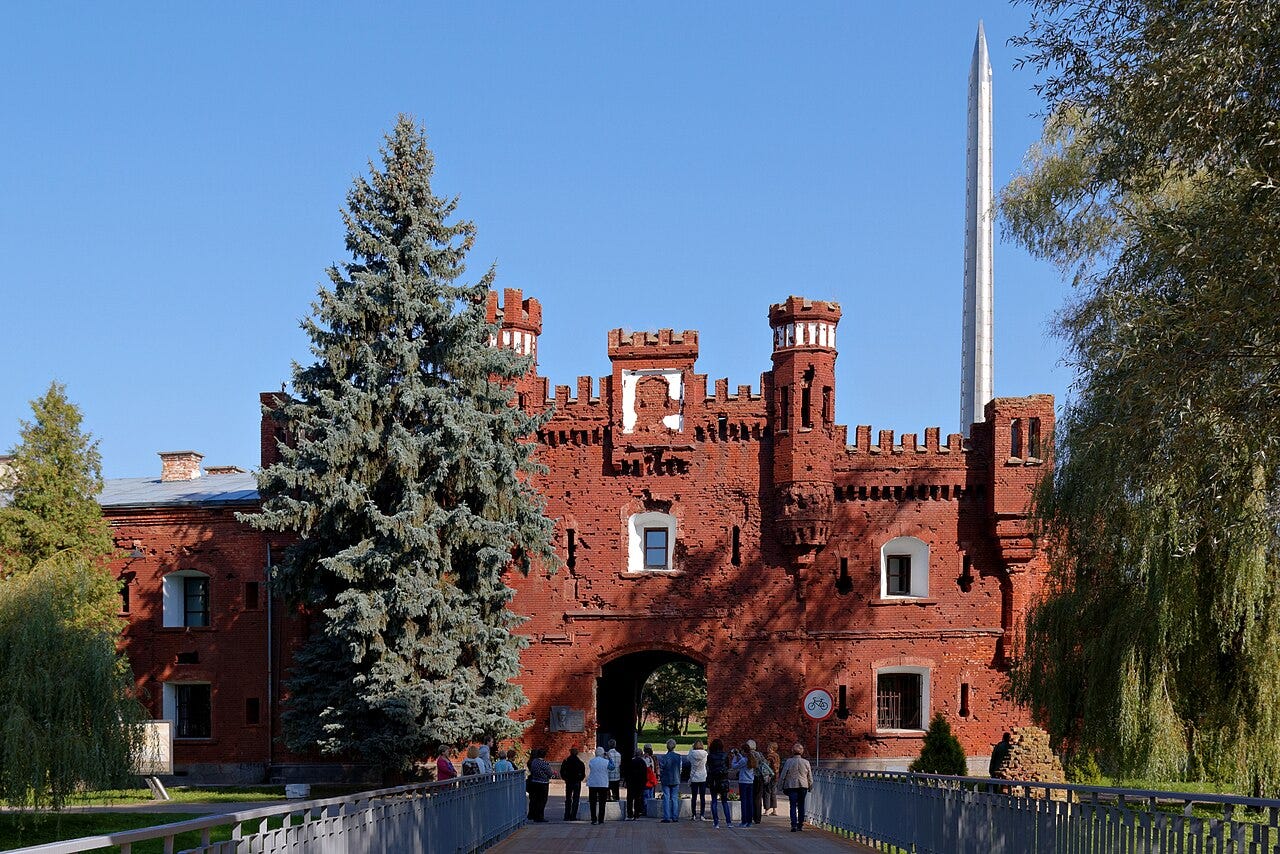
The famous Belarusian city of Brest along the country’s present-day border with Poland proves a striking real-world metaphor for Belarus’s geopolitical role within the Russian psyche. In 1918, the city was the site of the humiliating Brest-Litovsk Treaty which saw the Imperial German Army gain official control over most of Soviet Russia’s western territorial holdings.
The broader trend of Russian retreat from Eastern Europe after 1918 would give way to an equally aggressive push by the Soviets to retake much of the region. When under Polish control during the Interwar Period, Brest once again returned to the international spotlight during a failed Soviet invasion of the Eastern Borderlands against Poland in 1920 and then again during a successful Soviet invasion of Poland in 1939. During the Second World War, Brest became one of the most famous frontline fortress cities of the Soviet Union after Germany invaded the nation in 1941, a scenario used by Russia as proof of the necessity for a “territorial buffer” between itself and Europe.
Even in the present day, Brest lays occasional host to Russian military detachments intent on stoking fear in nearby Poland, Ukraine, and Lithuania. Whether on the offense or defense, at peace or at war, Brest and the wider territory of Belarus has always been seen by the Russians as a critical juncture to control—whether it be for aggressive or pragmatic purposes.
The Russo-Belarusian Relationship:
The Russian state under Vladimir Putin believes that the collapse of the Soviet Union was the greatest tragedy of the 20th century. Many of the other former Soviet states would beg to differ.
This fundamental divergence in opinions has prompted Russia to conduct an ugly and protracted struggle throughout the past two decades in an attempt to change the views of its many neighbors—often through force. Ranging from full-scale invasions of Ukraine and Georgia to significant campaigns of economic and political coercion towards Western-aspiring states like Armenia and Moldova, this dynamic seems to have spared no one—except Belarus. That benefit, however, has come with a big trade-off.
The Belarusian regime is probably the only ruling government other than that in Russia to agree with Putin’s assessment on Soviet Union’s historical legacy. Since its independence, Belarus has been under the near-absolute rule of former Red Army Officer Aleksandr Lukashenko, whose style of dictatorial governance resembles the same degree of Central Planning inherent to the economic and political systems of the U.S.S.R.
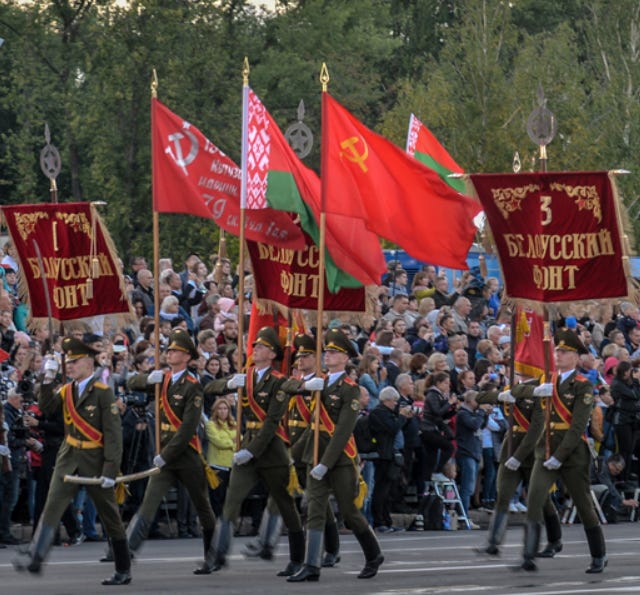
Upon taking power in a nascent Belarus, Lukashenko and his reverential outlook towards Belarus’s Soviet past lent itself well to a strong relationship with the Russian Federation, even if Moscow had altogether denounced its former Communistic model of governance in favor of mixed market capitalism by that point. Between 1999 and 2000, Russia and Belarus signed the Treaty on the Creation of a Union State, which laid the groundwork for the complete political and economic integration of Belarus into Russia in the coming years. As all of Lukashenko’s neighbors jolted westward at the start of the 21st century, he had led the country back into Russia’s embrace.
Lukashenko probably saw the Union State framework as an opportunity to become a power player not just within Belarus, but also within Russia. If the two countries were to unite, Lukashenko would automatically become one of the strongest political figures within the Union State whose Russian component was still reeling from the political turmoil of the Yeltsin presidency.
A fear of this outcome led many Russian reformers and centrists to initially delay the prospect of Russian-Belarusian reunification. Yet, the framework of eventual unification remains in effect to this day, and under Vladimir Putin, Russian-Belarusian political integration has proceeded to the point that Belarus is now considered by many to be a nominally-sovereign vassal state of the Kremlin whose sovereignty hardly extends beyond the nominal.
In 2022, Belarus allowed Russian troops to use its territory to launch a motorized assault on the Ukrainian capital of Kyiv, and it has also allowed Moscow to station nuclear warheads on its territory, posing a serious risk to nearby NATO countries like Poland, Lithuania, and Latvia. On the international stage, this has led Belarus to bear many of the same economic and political burdens from the Ukraine War as has Russia.
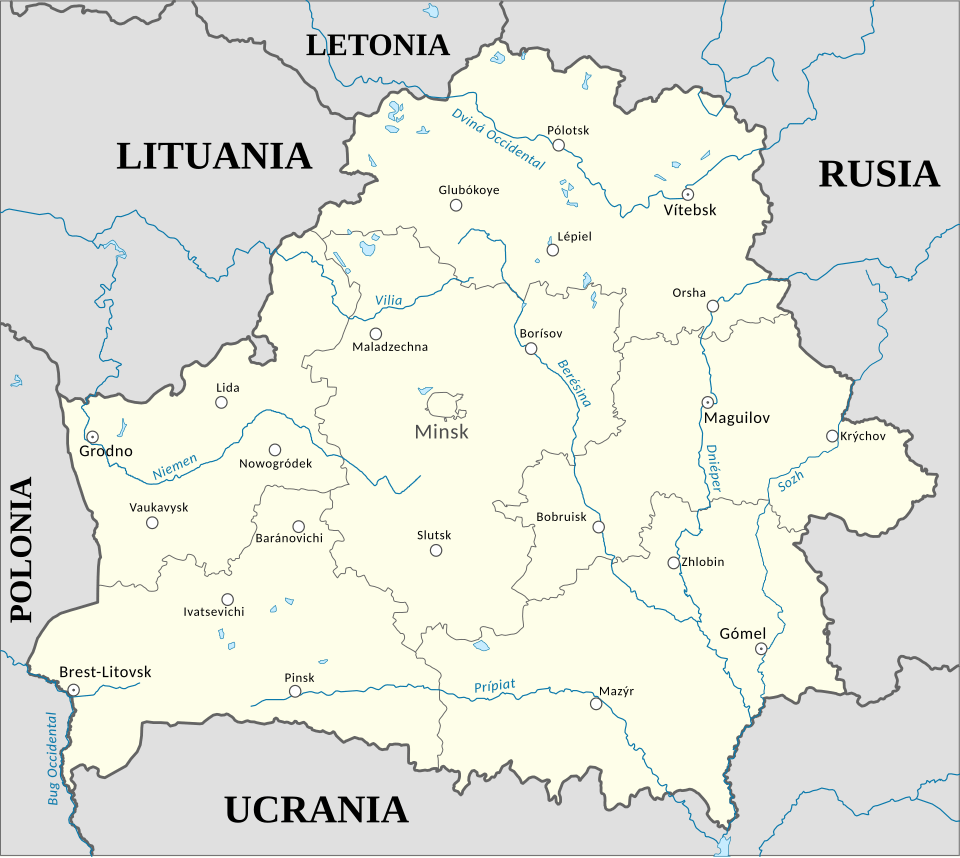
With Lukashenko now in his latter years, a Russian annexation of Belarus likely remains the ends of Belarusian-Russian relations—even though Belarus has since come to largely oppose such a notion. As a country whose political, economic, and military foundations now lie almost entirely at Russia’s mercy, many in the West now see Belarus as wholly lacking in both strategic autonomy and the ability to resist a Russian annexation if such a development were to transpire.
History has been no stranger to “puppet states” of a somewhat similar manner. When the Germans conquered France in 1940, they left the southern half of the country nominally sovereign under the government of Vichy France. Led by Phillipe Petain, Vichy France would remain neutral in the Second World War but under German dependence in all but name. While the historical, cultural, and ideological differences between both states differ substantially, Belarus mirrors the same dynamic of nominal sovereignty—with a shared caveat.
As opposed to direct annexation, cultivating puppet states often serves to create overland buffers with rival states and to deter the international backlash which outright territorial integration tends to precipitate. In Russia’s case, this strategy is intended to play out through a framework of “gradual annexation” that may prove more palatable to Moscow’s European rivals than would be overnight territorial integration.
However, outsourcing governance comes with a risk—the free will of individual rulers. Belarus may be considered a “puppet state” at its extreme, but at home, it is under the total and individual leadership of Lukashenko, a ruler whose dependency on Russia does not necessarily prevent him from making his own decisions on matters of domestic and foreign policy.
When the Vichy government under Petain discovered the ability to test the red lines of its German patron during the Allied invasion of North Africa in 1942, it was promptly invaded and occupied by the Wehrmacht. Lukashenko’s vassalage operates in a similar, more nuanced manner: Belarus’s dependency on Russia doesn’t mean it can’t defy Moscow—though it does mean that it may not be able to resist the consequences for doing so…
A Harrowing Future?
While still a client state of Russia, Belarus is showing subtle signs of defiance rather than allegiance to the Kremlin. In a way not-so-dissimilar from many other Post-Soviet states, Belarus is in fact showing signs of growing autonomy—albeit transient—that have given Minsk more geopolitical dynamism than perhaps ever before.
Of course, Belarus remains deeply integrated with Russia, and the pivot we’re describing is far more potent in relative terms within the context of Belarus’s strategically rigid past than it is relative to other examples of more pronounced realignments throughout the Near Abroad.
Yet, through the exclusive and relative lens of Belarusian politics, the contrast is palpable. Moscow’s preoccupation in Ukraine has given Minsk the ability to cross red lines without immediate consequence that it’s never dared to cross before. Since 2022, it’s quite possible that the wide array of crippling economic sanctions that Belarus garnered for its initial involvement in the Ukrainian conflict prompted Lukashenko to reassess his longstanding advocacy for reunification with Russia, an opinion which would logically necessitate moderate detachment from Russia. Why latch on to a sinking ship, after all?
This reality does not change the underlying dependence on Russia which defines Belarus’s existence. However, what it does insinuate is a mounting risk that Belarus’s subtle pivot away from Russia will have consequences beyond its ability to resist. Unlike countries like Moldova and Armenia whose dependency upon Russia in the wake of Westernization has not been potent enough to prompt invasion, Belarus simply has no safeguards to prevent such an outcome. It is in this dynamic of dependency that a risk lies—the acceleration of the Kremlin’s pre-existing plans of Belarusian annexation, likely through more aggressive and regionally-destabilizing means.
Exploring the “Pivot:”
With great interest, Belarus has made a small yet substantive shift away from its previously-unconditional relationship with Russia in recent months. Minsk has shown far more resistance to supporting Russia’s ongoing war against Ukraine, and it has also re-engaged with the United States after years of diplomatic silence. While Russo-Belarusian ties remain markedly visible through joint military drills on Belarusian territory, even these efforts have been dialed back in intensity by Lukashenko, who has called for less troop activity along Belarus’s borders with Ukraine and NATO.
In the wake of its diplomatic fallout with Minsk in 2022, the United States has once more begun to rebuild its relationship with Belarus under the Trump Administration. To Washington, the cultivation of better ties with Minsk would serve both to challenge unilateral Russian dominance in the country and to cultivate a governmental partner that could serve as a common intermediary for Russo-American negotiations surrounding the War in Ukraine. Improved American-Belarusian ties could also serve as a model for the future stabilization of the Russo-American relationship and for the deferral of a Russian annexation of Belarus, since such a development would give the Kremlin a far greater territorial reach into the heart of NATO’s embattled eastern flank.
Throughout 2025 and 2026, American Special Envoy John Coale has been involved in a series of meetings with Belarus’s Lukashenko that have yielded the release of hundreds of political prisoners and the easing of American sanctions on Belarus—most especially on the country’s critical potash industry.
In a marked shift from its 2022 position towards the Russo-Ukrainian War, Belarus has shown active resistance to the Russian foreign policy agenda through its bilateral relationship with Moscow. As Russia’s war in Ukraine has come under mounting domestic and fiscal pressure, the Kremlin has been wholly unable to win over the active Belarusian military support it needs to keep its war machine afloat. Considering that even North Korea was willing to contribute to Russia’s meat grinder, this deviation from the Kremlin’s agenda will not go without notice to a Russian government eager to keep its periphery from further unraveling.
There is a great deal of hazard surrounding this wider trend of Belarusian political agency. Since Russia commands so great a lever over the political fate of Belarus, the Kremlin could easily respond to what it sees as a penetration of Western influence into its western flank with a sudden or gradual annexation of Belarus. While Moscow’s political and economic dominance within Belarus would make a nominally “consensual” annexation more likely, there’s little that a defiant Lukashenko could do to stop the Russian troops already inside his country from deciding that it was time to take him up on his promise of creating a Union State.
Inevitable but Variable:
Belarus may still be an effective vassal state of the Russian Federation whose sovereignty is largely outside of its own ability to shape, but its newfound resurgence in geopolitical agency paints a far more nuanced picture than the one-sided narratives we’ve long associated with “Europe’s Last Dictatorship.”
If Belarus becomes too resolute in its effort to distance itself from Russia’s foreign policy agenda, it will most certainly face imminent annexation by either “consensual” or coercive means. Likewise, if the United States or Europe are too assertive in their efforts to garner influence within the country, their efforts will likely provoke a harsh Russian response.
The danger of a Russian annexation of Belarus does not surround political or economic factors, but rather geographic ones. The Belarusian GDP of less than $100 billion and population of just over 9 million would do very little to augment the roughly $2.5 trillion dollar economy of a Russian state whose population exceeds 140 million. Yet, geography does matter in this case.
The creation of an immediate border between Russia and the NATO countries of Latvia, Lithuania, and Poland would increase the risk for cross-border confrontation almost overnight. It would also enhance the fragility of the precarious Suwałki Gap separating Poland from the nearly-isolated Baltic States, all of which are members of NATO. A Russian annexation of Belarus would also nearly double the country’s border with Ukraine, further straining Kyiv’s resources and giving the Kremlin a degree of aerial drone coverage that would seriously threaten Western and Central Ukraine.
Ironically, Russia could stop short of immediate Belarusian annexation through other avenues of retaliation. If Moscow deems Belarus’s deviation from its foreign policy agenda too stark, Russia could find ways to drag the country into the ongoing War in Ukraine, thereby shattering what little remains of Belarus’s strategic autonomy and creating exactly the opposite result of what Lukashenko’s foreign policy agenda is arguably trying to achieve. As is typically the case in one-sided diplomatic relationships, Belarusian involvement in the War in Ukraine would most certainly serve as a prelude to direct Russian annexation, since Minsk’s resources would become consumed within the broader Russian war machine in an irreversible and catastrophic manner.
Russia’s growing inability to shape its region has made the country both more powerless and more assertive to shape its surroundings. This overextension may very well give Belarus the ability to temporarily explore avenues towards regional autonomy, but it also risks a Russian effort to outright annex the country—a development Minsk is in many ways powerless to deter if Russia deemed it necessary.
The real complexity in Belarus’s case is not one of a singular inevitability, but of possibilities—some of which would involve uncontrollable consequences. For Belarus to retain sovereignty while enhancing its autonomy, it will have to find a way to augment its ties with secondary parties without garnering the suspicion of its Russian neighbor. The feasibility of such a proposition is questionable in and of itself, but if Minsk wants to remain on the map, it will need to play a long, masterful, and protracted balancing act unlike anything seen in modern history. If not, it may very well be faced with what many deem to be “inevitable.”
A much needed look at a not-often-talked-about chess piece in the ongoing Russian war in Ukraine...
Thank you for your analysis